Nirwana AI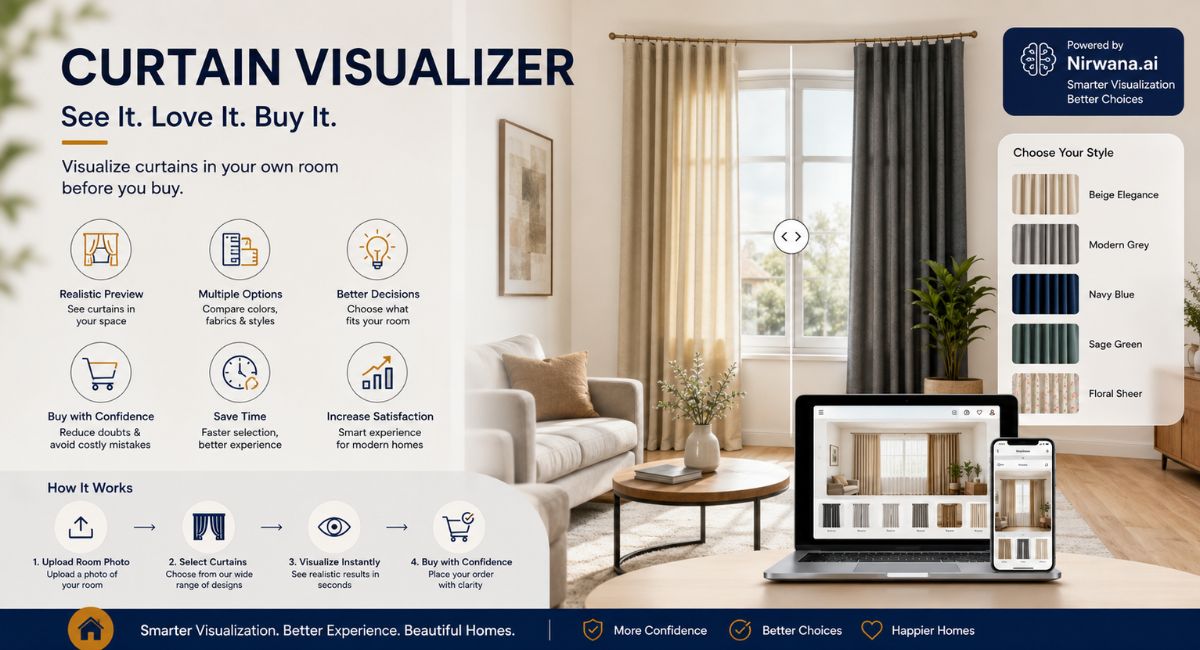
Choosing curtains sounds easy until you actually start doing it. You see a beautiful fabric in a showroom or online, but the real question is always the same: Will this look good in my room?
Curtains can completely change the mood of a space. The right curtain can make a room look warm, premium, spacious, and finished. The wrong one can make even a beautiful interior feel dull or mismatched. This is why more homeowners, interior designers, retailers, and curtain brands are now using a curtain visualizer to make the buying process easier, faster, and more confident.
Instead of asking customers to imagine how a curtain will look, a visualizer lets them see it directly in their own room. That small change can make a big difference in how people choose, trust, and buy curtains.
Why Choosing Curtains Is More Difficult Than It Looks
Curtains are not just fabric pieces hanging near a window. They affect lighting, wall balance, furniture coordination, privacy, and the overall interior style. A curtain that looks elegant in a catalog may feel too dark in a small bedroom. A sheer curtain may look soft in a showroom but may not provide enough privacy at home.
Customers usually struggle with questions like:
Will this color match my wall paint?
Will the fabric look too heavy?
Should I choose full-length curtains or window-length curtains?
Will this pattern suit my sofa, flooring, or wallpaper?
Will the room look brighter or smaller after installation?
These doubts often slow down the purchase decision. Many customers keep delaying because they are afraid of making an expensive mistake. This is exactly where a curtain visualizer becomes useful.
What Is a Curtain Visualizer?
A curtain visualizer is a digital tool that allows users to preview different curtain designs, colors, fabrics, and styles inside a real room image. The customer can upload a photo of their bedroom, living room, office, hotel room, or showroom space and see how different curtain options would look before buying.
This helps customers move from imagination to actual visual decision-making. They are no longer guessing. They are comparing real options in a space they already understand.
For curtain retailers and interior brands, this creates a more guided and modern sales experience. Instead of showing only fabric swatches, sales teams can show how those fabrics will look in the customer’s own room.
How a Curtain Visualizer Changes the Customer Journey
Earlier, curtain buying depended heavily on imagination. A customer would visit a showroom, touch the fabric, see a sample, and try to mentally place it inside their room. But most people are not trained designers. They cannot easily imagine scale, lighting, folds, color balance, and room impact.
With a curtain visualizer, this journey becomes much simpler.
A customer can compare beige curtains with grey curtains. They can check whether a floral pattern suits their bedroom or whether a plain fabric looks more premium. They can also see how blackout curtains, sheer curtains, layered curtains, or luxury drapes may change the final look.
This makes the customer feel more involved and more confident. When people can see the final result, they are less likely to hesitate.
Benefits of Using a Curtain Visualizer
Better Buying Confidence
The biggest benefit is confidence. Curtains are often custom-sized, and once they are stitched or installed, returns can be difficult. A visual preview reduces uncertainty. Customers feel safer because they can see how the curtain may look before placing the order.
Faster Decision-Making
In many showrooms, customers spend a long time comparing fabrics. They ask family members, take photos, and come back later. A curtain visualizer can shorten this process. When customers can instantly see multiple options in their room, they can decide faster.
Improved Sales Experience
For curtain brands, the sales process becomes more interactive. Instead of only saying “this fabric will look good,” the sales team can actually show it. This creates trust and makes the brand look more professional and technology-driven.
Reduced Design Confusion
Interior choices are connected. Curtains must match walls, flooring, furniture, cushions, rugs, and lighting. A visualizer helps customers understand whether the curtain fits the complete room, not just the window area.
Useful for Online Curtain Sales
Selling curtains online can be difficult because customers cannot touch or visualize the product properly. A curtain visualizer helps bridge that gap by giving online buyers a more realistic preview. This can improve engagement, reduce doubts, and support better conversions.
Real Examples of How Curtain Visualization Helps
Imagine a homeowner renovating a master bedroom. They like navy blue curtains in the catalog, but their room has dark wooden furniture and warm lighting. After previewing the curtains digitally, they realize the room feels too heavy. They then try soft beige or light grey curtains and instantly see a more balanced look.
Now imagine a hotel project. The interior designer needs to finalize curtains for 40 rooms. Instead of creating multiple physical samples, they can use visualization to compare different curtain styles across room types. This saves time and improves presentation quality.
For a curtain showroom, the sales team can ask customers to upload a room photo and then show five to ten suitable curtain options. This creates a personalized experience and makes the customer feel that the recommendation is made for their space, not just pushed from available stock.
Why Curtain Brands Should Adopt Visualization Technology
The home improvement industry is becoming more visual and digital. Customers today expect better previews before making decisions. They are already used to seeing furniture, paint, tiles, and wallpapers digitally. Curtains are now moving in the same direction.
Brands that use a curtain visualizer can stand out from traditional sellers. They can make their website more engaging, help their sales team close faster, and give customers a more premium buying journey.
This is especially useful for brands selling custom curtains, premium drapes, blackout curtains, sheer curtains, and designer fabrics. The higher the product value, the more important visual confidence becomes.
How Nirwana.ai Supports Curtain Visualization
Nirwana.ai helps home improvement and interior brands create realistic visualization experiences for their customers. For curtains, the goal is simple: help users see how a curtain design will look in an actual room before they buy it.
With tools like realistic room previews, fabric visualization, lighting-aware output, and easy customer interaction, Nirwana.ai helps brands move beyond static product images. Customers can make decisions with clarity, while brands can offer a smoother and more modern sales process.
For retailers, this can be used in showrooms, websites, sales presentations, and customer consultations. For designers, it can make client approvals faster and more visual.
The Future of Curtain Buying Is Visual
Curtain buying is no longer only about fabric samples and guesswork. Customers want to see, compare, and feel confident before they spend money. A curtain visualizer gives them that confidence.
It helps homeowners make better choices, supports designers with clearer presentations, and gives curtain brands a stronger way to sell. As more customers expect digital previews, visualization will become an important part of the curtain buying journey.
Conclusion
Curtains play a major role in how a room feels, but choosing the right one can be confusing without a proper preview. A curtain visualizer makes this process simpler, more visual, and more reliable. It helps customers trust their choice and helps brands create a better buying experience.
For curtain brands and retailers looking to improve customer confidence and modernize their sales journey, solutions like Nirwana.ai can be a smart step forward.

 Rohit Verma
 Harry dgsquares