nelson k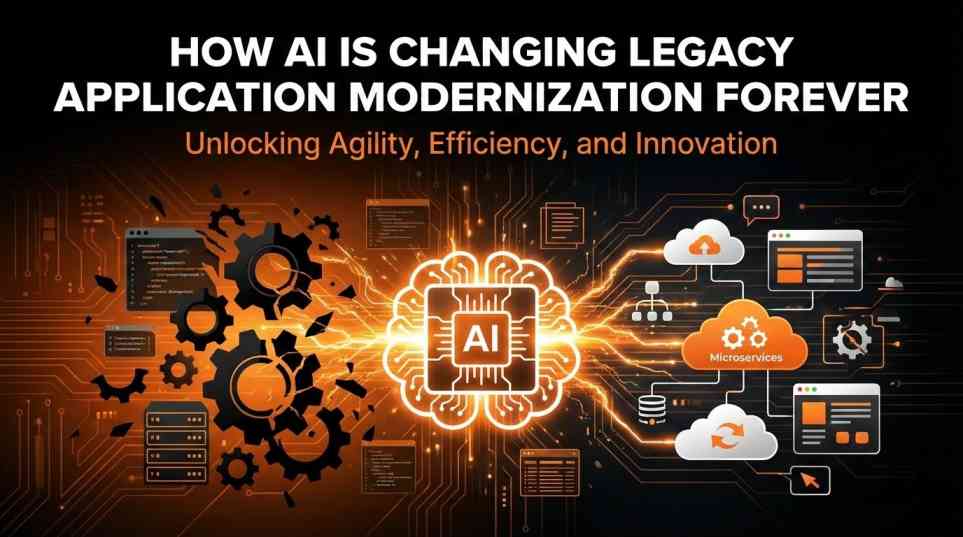
There is a whiteboard in our conference room that nobody erased for almost two years. It had a list on it — eight items, written in red marker, from a brainstorming session in late 2022 where we tried to figure out why our operations felt like they were running through mud.
Slow order processing. Duplicate customer records. Reports that took forty-five minutes to generate. A mobile experience so poor that our field reps stopped using the app entirely and went back to calling the office. Three different workarounds our billing team had invented because the invoicing module could not handle our current pricing structure. An integration with our shipping partner that broke every time they updated their API. An analytics dashboard that showed data from two days ago and called it “real-time.”
Eight problems. One root cause. Software we had outgrown years earlier but kept running because replacing it felt like too much to take on.
That whiteboard haunted me. Every Monday morning I walked past it and thought, “We really need to deal with this.” And every Monday morning I found a reason not to.
Then I saw what AI was doing to legacy system modernization services in 2025, and I realized the project I had been avoiding no longer looked like the project I was afraid of. The scope had not changed. The tools had. And the difference was not incremental. It was transformational.
The cost of walking past the whiteboard
Every business running legacy software has their own version of that whiteboard — a list of known problems that never gets acted on because the fix seems too big.
The collective cost is staggering. Organizations spend 60 to 80 percent of IT budgets on maintenance. Eighty-seven percent run applications with exploitable vulnerabilities. Legacy-skilled developers retire at 10 percent annually, making support more expensive every year. And new regulatory frameworks like the EU AI Act are demanding capabilities that aging platforms were never designed to deliver.
But the numbers that matter most are the ones on your own whiteboard. The revenue you leave uncollected because your system cannot handle your pricing. The clients who stop engaging because your mobile experience embarrasses you. The reports that arrive too late to inform the decisions they were built for. Those are not IT problems on a backlog. Those are business outcomes you are choosing not to fix.
What AI did to the project I was avoiding
I expected modernization to be a massive, disruptive undertaking. That expectation was based on 2022 reality. By the time we engaged a team in late 2025, AI had reshaped every phase.
Discovery that replaced months of archaeology with days of clarity. AI scanning tools mapped our entire environment in ten days. Every application. Every dependency. Every data pipeline. They found that our CRM was quietly sending customer updates to a deprecated marketing automation platform through a webhook a former marketing director had configured in 2019. The platform had been deactivated but the webhook was still firing — creating a growing backlog of failed API calls that was silently degrading our CRM’s performance. Nobody on our current team knew. We had been blaming the CRM for being slow when the real culprit was a ghost connection to a tool we stopped paying for three years ago.
Migration that moved at the speed of focus, not bureaucracy. Generative AI translated our most problematic modules into modern architecture in six weeks. The billing overhaul that our previous vendor had quoted at nine months — including a disclaimer about “potential scope adjustments” — was completed in forty-three days. Human engineers made every architectural decision. AI handled the translation volume that would have required a team three times the size.
Testing that found what embarrassment would have found later. AI generated over 2,200 test scenarios. One discovered that our system truncated customer notes after 4,000 characters — a limitation originally set in 2013 when notes were brief. By 2025, our account managers were writing detailed relationship histories that regularly exceeded that limit. Twelve percent of our customer records had silently lost data. Nobody had reported it because nobody realized the full notes had ever existed. AI caught it. A human never would have.
Six steps — from whiteboard to clean slate
Step 1 — Map what exists, including what nobody admits
AI handles the technical scan. You handle the human truth. Our shipping coordinator revealed during her interview that she kept a personal spreadsheet tracking which orders needed manual address corrections because “the system gets zip codes wrong for P.O. boxes about 20 percent of the time.” That was not in any bug report. It was just something she had absorbed into her daily routine.
Step 2 — Put a dollar amount on every red marker item
Our eight whiteboard problems had individual costs. The forty-five-minute reports cost us roughly three hours of senior analyst time per week. The broken shipping integration required manual intervention on about fifteen percent of orders. The mobile app abandonment meant our field reps were calling in orders that should have been digital — adding processing time and errors. When we totaled it, the annual cost of that whiteboard was north of $170,000. A landscape architecture firm I know did the same exercise and found their legacy design platform was costing them $94,000 annually in workarounds, rework, and lost bids. Their principal said, “I have been staring at this number in a different form for five years and never added it up.”
Step 3 — Start with the problem your clients feel
We could have started with the analytics dashboard or the internal reports. We started with the mobile experience and the order processing — the two items our clients directly encountered. Ten weeks of focused work. Our field reps started using the app again within days of launch. Order accuracy improved immediately. One long-standing client sent an unprompted email: “Whatever you did with your ordering system, it is noticeably better.” That feedback funded every subsequent conversation about the remaining phases.
Step 4 — Execute with AI doing the volume and humans doing the thinking
Forty-three days on billing. Six weeks on the CRM cleanup including eliminating the ghost webhook. Each module migrated, tested, and validated independently. No big-bang switchover. No all-or-nothing gamble. Just disciplined, sequential progress through the whiteboard list.
Step 5 — Run parallel until the numbers match perfectly
Every migrated component ran alongside its legacy counterpart for two to three weeks. AI testing compared outputs transaction by transaction. During the billing parallel, the tools flagged a rounding difference of less than one cent on a specific tax calculation for orders shipped to two counties in Virginia. A tiny discrepancy. But across a year of transactions to those counties, it would have compounded into a reconciliation headache. Fixed before cutover. Our CFO never had to know.
Step 6 — Erase the whiteboard and build the habit that keeps it blank
Monitoring dashboards. Quarterly reviews. A documentation owner who actually owns it. We erased that whiteboard on a Thursday afternoon in March. Everyone in the room signed their name on the clean surface. Slightly cheesy. Genuinely meaningful. Our infrastructure costs dropped 39 percent. Our order processing time was cut by more than half. And every Monday morning, I walk past a whiteboard that has nothing on it. That is the return on investment I feel the most.
What the other side looks like
Systems that absorb growth instead of resisting it. Client experiences that generate compliments instead of apologies. Maintenance budgets that free up enough to fund the next competitive move. Development cycles measured in weeks. A team that trusts its tools. And a conference room whiteboard that stays clean because the problems that filled it no longer exist.
The cost question — answered plainly
Phased modernization means one system at a time. Invest. Validate. Decide. ROI arrives within twelve to eighteen months for most organizations. Legacy systems run in parallel as a safety net throughout. Rollback available at every stage.
The real cost is not modernization. The real cost is another year of walking past a whiteboard full of problems you already know how to name but have not yet decided to fix.
Why Sparkout Tech was the right call for us
They did not promise to fix all eight items at once. They asked which one hurt the most, built a plan around that, and delivered before we had time to second-guess the decision.
Their legacy application modernization services follow the approach this article describes — AI-powered discovery, business-impact sequencing, phased parallel execution, and ongoing stewardship. For organizations that have been walking past their own whiteboard for too long, Sparkout Tech provides the structured path from knowing what is wrong to actually fixing it.
Your whiteboard is not going to erase itself
Get a complimentary assessment from Sparkout Tech. A clear evaluation of your systems, your costs, and your options. No obligations. No overengineered proposals. Just an honest picture of where things stand and what the path forward actually requires.
We walked past ours for almost two years. Eight problems in red marker. $170,000 a year in invisible costs. A team that had normalized dysfunction because the alternative seemed too hard.
It was not too hard. It was ten weeks for the first fix and a clean whiteboard by spring. Every business owner I have told this story to says the same thing: “I have a list like that too.”
You do. You know you do. The only question is how many more Mondays you are going to walk past it.

 Commport Technologies
 Frank Weiss