NAMTECH Institute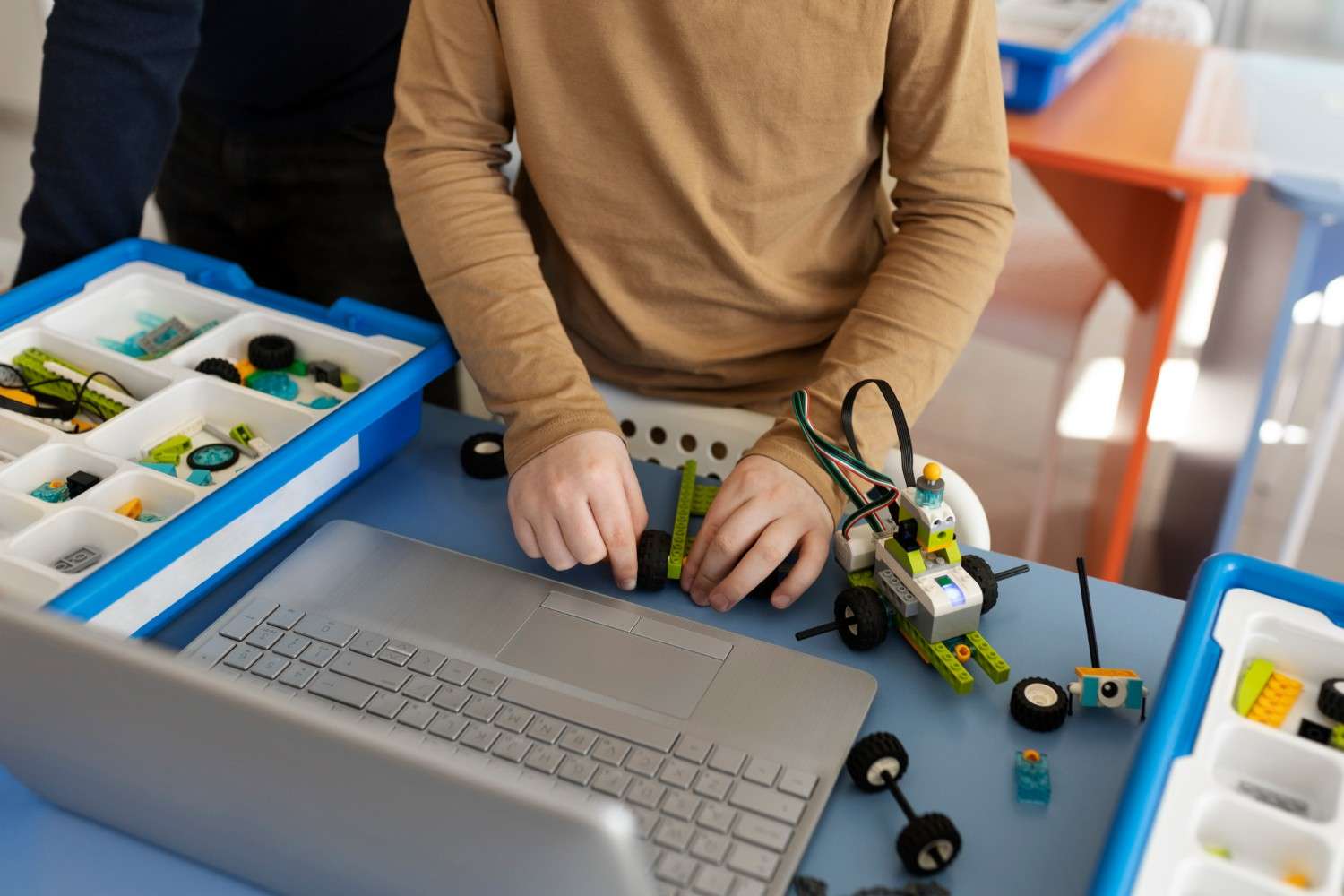
Most engineering graduates can describe how a PLC works. Ask them to wire one up, program a sequence, and then troubleshoot it when it doesn’t behave the way the manual says it should, and things get quiet fast. That gap, between knowing something and being able to do it under pressure, is exactly what smart factories expose. And it’s why a good automation and robotics institute builds its training around closing that gap, not just teaching concepts.
Smart factories don’t run on theory. They run on people who can respond when a robot arm stops mid-cycle, read a SCADA dashboard at 2 am, and figure out whether the problem is a sensor or a sequence. Getting students to that level is a specific kind of work.
What actually happens inside a smart factory?
Before getting into how training works, it helps to understand what students are being trained for.
A smart factory connects machines, robots, sensors, and software into one system. A Fanuc arm on one end is talking to a SCADA system, which is feeding data into an IIoT platform, which is alerting a supervisor through a dashboard. Nothing works in isolation. If a student only knows robotics but can’t read a PLC ladder diagram, or only knows PLC but has never touched a robot controller, they’ll struggle to fit into that environment.
The demand isn’t for narrow specialists. It’s for people who understand how the layers connect.
Why hands-on training beats classroom hours
This is where most academic programs fall short, and where a dedicated automation and robotics institute is built differently.
Industry-aligned institutes structure training around actual equipment, not scaled-down models or just simulations. Students at centres like IIS Mumbai, for example, get time on Fanuc and Universal Robots simulators alongside real controllers, working through robot welding sequences, AMR programming, and actual fault scenarios. NAMTECH, running out of IIT Gandhinagar, takes this further with a residential program where students spend full trimesters on mechanical design, electrical panels, fluid power, and capstone projects inside industrial environments.
The difference shows up fast. A student who has reset an e-stop and recovered a robot sequence 20 times will not panic when it happens on the factory floor. One who has only read about it will.
Simulation has a role too. Software like Fanuc’s ROBOGUIDE or RobotStudio lets students test programs before running them on physical hardware, which saves time and reduces risk. But it’s a bridge, not a destination. The real learning happens when physical constraints enter the picture.
The core skills that smart factories actually test
An automation and robotics institute worth attending will cover these in depth:
PLC and SCADA programming are foundational. Almost every smart factory control system relies on them. Students need to write and read ladder logic, configure HMI screens, and set up alarm systems. Institutes like Probotix in Pune and Samyak Infotech run dedicated PLC-SCADA tracks with job placement focus for exactly this reason.
Industrial robot programming is the second layer. This includes not just how to write a robot program, but how to define work objects, configure tool data, use conditional logic, and read error logs. A student who has only watched videos of a KUKA or ABB robot is not prepared for a real production cell.
IIoT and data connectivity are where newer training programs are catching up. Smart factories generate enormous amounts of data. Students need to understand how sensors communicate, how data flows from a machine to a monitoring system, and what to do with that data. The School of Automation and Robotics included PLC, SCADA, and IIoT in a single training program for this reason, treating them as one connected subject rather than three separate ones.
Machine vision and quality systems are increasingly common in production lines. Students learn to configure camera systems, set inspection parameters, and integrate vision outputs with robot actions.
How project-based learning changes readiness
Reading and watching can take someone to about 30% of where they need to be. The rest comes from building, breaking, and fixing things.
The better institutes set up capstone projects that mirror real factory conditions. A student might be asked to design a pick-and-place cell, write the robot program, integrate it with a PLC sequence, connect sensor feedback, and present the system as if handing it over to a plant manager. That process forces them to face every gap in their knowledge before they’re sitting in front of a hiring manager.
NAMTECH’s program explicitly includes on-the-job training components where students go into actual industrial environments to apply what they’ve built in the lab. That’s a different level of readiness than a purely campus-based program.
The Industrial Robotics Institute runs a two-month internship program for college students specifically to build this applied layer on top of classroom knowledge.
What recruiters from smart factories look for
Hiring managers at manufacturing companies are fairly direct about this. They want people who can walk into a facility, look at a running system, and identify what each part is doing. Not people who can recite definitions.
A student who comes out of a strong automation and robotics institute can usually do three things well: read and modify a PLC program, operate and troubleshoot a robot cell, and understand how a factory’s control network fits together. Those three things open most doors.
Soft skills matter here too, but in a specific way. Factory floors are loud, sometimes stressful, and require clear communication with people who may not share the same technical background. Students who have worked in lab teams, presented project outcomes, and dealt with equipment that didn’t behave as expected handle that environment much better.
The curriculum gap that still exists in many programs
Not every institute is built the same way. Some are still running programs that were designed for older factory setups, where automation meant one PLC and a few sensors. Smart factories today are more complex and more connected.
Digital twins, for example, are now a real part of how factories plan and optimize production. LnT EduTech has started including digital twin concepts and robotic process automation in their curriculum specifically because manufacturers are asking for it. Institutes that haven’t updated their programs since 2018 are producing graduates who know older systems well but struggle with the newer integration layers.
That’s not a small problem. Students choosing a training program should ask specifically whether the curriculum includes IIoT integration, collaborative robot (cobot) programming, and data-driven maintenance concepts. If the answer is vague, the program is probably behind.
What the training period looks like in practice
Duration varies by program and depth. An eight-week intensive like the one at IIS Mumbai is enough to build solid foundational competency. A 12-month residential program like NAMTECH’s goes much deeper, with four trimesters covering mechanical systems, electrical systems, automation, and robotics in sequence, with on-the-job training embedded at the end.
The right length depends on the student’s starting point. Someone with an electronics or mechatronics diploma gets further faster. Someone coming from a non-technical background needs more time on fundamentals before the automation layer makes sense.
What good programs share is structure. Clear progression from foundational concepts to system-level thinking, consistent access to real equipment, and assessment that goes beyond written tests.
Choosing the right institute matters more than the certificate
A certificate from an automation and robotics institute means something only if the training behind it was serious. The name on the paper is less important than what the student actually did during the program.
When evaluating an institute, ask to see the lab. Ask what robots and PLCs students work on. Ask what a typical project looks like. Ask what percentage of graduates are placed in manufacturing roles within six months. Those questions will tell you more than any brochure.
The smart factory market is growing, and companies are actively looking for people who can operate in it. But they can tell the difference between someone who sat through a course and someone who actually spent time building and troubleshooting real systems. That difference starts in the lab, on day one of training.


 dada sada
 james hat