Bodyassist Health and Wellness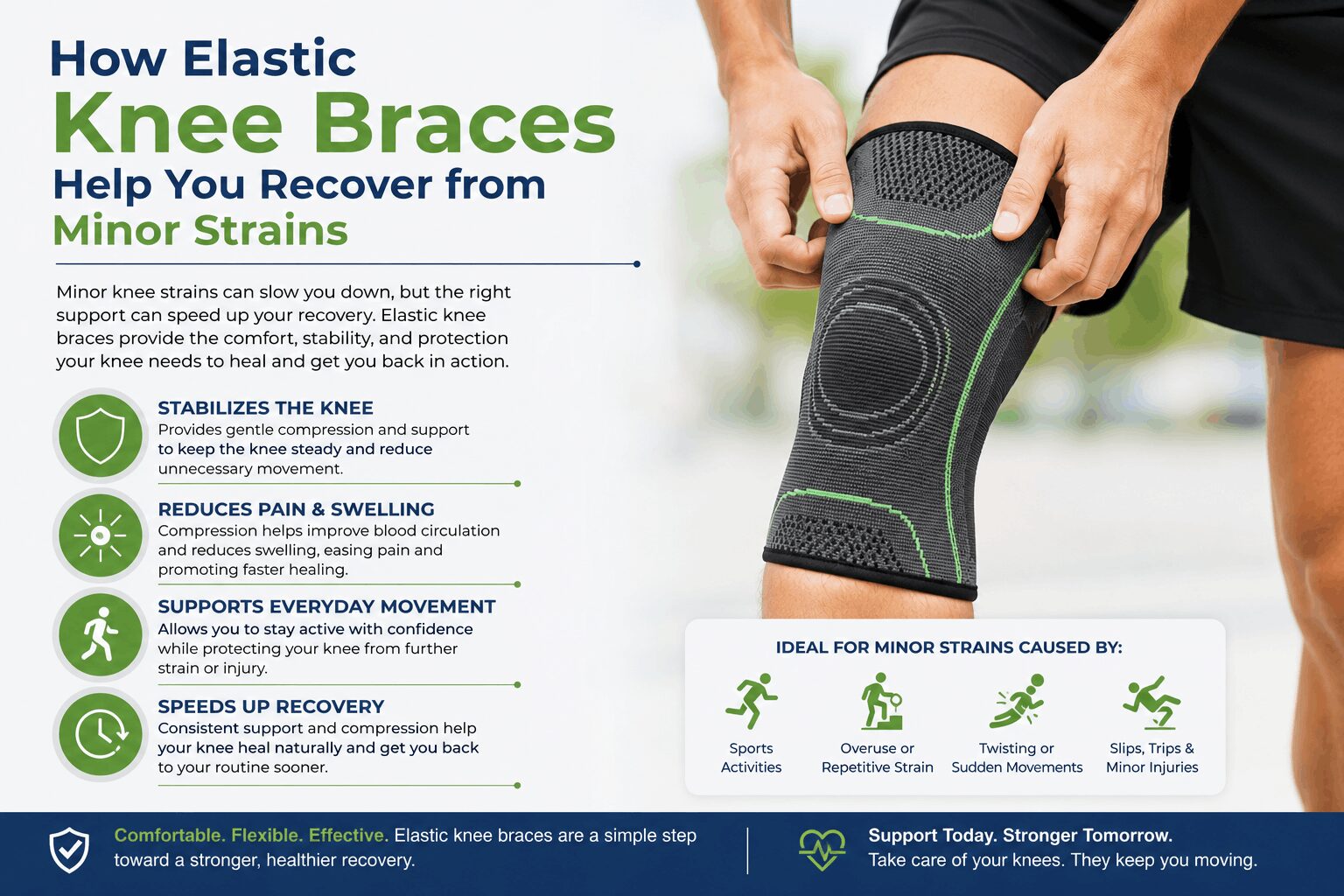
An unexpected twist on the walking trail, a sudden misstep during your morning jog, or just an awkward move while cleaning the garage—minor knee strains happen to almost everyone. When the knee gets stretched past its normal limits, the immediate results are usually a mix of mild swelling, a dull ache, and a sudden hesitation to put your full weight on that leg.
During the initial stages of healing, your body needs a balance of protection and movement. That is where elastic knee braces support your recovery. Rather than locking your joint down completely like a rigid medical cast, a flexible support provides a gentle safety net that allows you to stay mobile while your ligaments and muscles mend.
Understanding a Minor Knee Strain
Before looking at how to support the joint, it helps to understand what happens during a minor strain. A strain refers to a stretched or slightly torn muscle or tendon. In the knee, this often occurs in the tendons supporting the kneecap or the large muscle groups like the hamstrings and quadriceps that cross the joint.
For severe tears, medical intervention or rigid immobilization is necessary. However, for a minor (Grade 1) strain, the structural integrity of your knee is still intact. Your main challenges are managing the mild inflammation and keeping the joint tracking correctly so you do not accidentally aggravate the injury during daily activities.
How Elastic Knee Braces Support Recovery
Unlike heavy structural braces that feature metal hinges and thick plastic shells, elastic supports are knitted or woven from flexible, breathable fabrics. They assist your recovery through three primary mechanisms:
1. Controlled Compression and Swelling Management
After a strain, the body rushes fluid to the injured area to protect it, which causes swelling. While a little fluid is a natural part of healing, excess swelling causes stiffness and increases pain. The form-fitting nature of elastic sleeves applies even, circumferential pressure around the entire joint. This compression encourages fluid to move away from the joint, reducing puffiness and keeping the knee moving more freely.
2. Improved Proprioception (Joint Awareness)
Have you ever noticed that simply putting a bandage on a sore spot makes you more mindful of how you move it? This is related to a neurological concept called proprioception—your brain’s awareness of where your limb is in space.
When you wear a snug elastic brace, the fabric constantly stimulates the sensory receptors in your skin. This increased feedback tells your brain exactly what your knee is doing, helping you automatically correct your posture, avoid sudden twisting motions, and walk with a more stable, confident gait.
3. Gentle Warmth for Muscle Relaxation
Isolating the area with a high-quality elastic sleeve helps retain natural body heat. This localized warmth keeps the surrounding muscles, tendons, and ligaments pliable. When muscles remain warm, they are less likely to spasm or tighten up defensively, which is a common cause of secondary discomfort after a minor strain.
The Role of Targeted Magnetic Therapy
While standard compression works wonders for blood flow and stability, some recovery plans incorporate specialized elements to target localized discomfort. This is where options like a Magnetic Knee Support come into play.
These specialized sleeves embed small, permanent magnets directly into the fabric, usually positioned around key areas like the kneecap or the sides of the joint. The concept relies on the idea that mild magnetic fields can interact with the body’s natural fields, subtly encouraging local circulation and helping to soothe localized aches. For individuals managing the lingering stiffness of a minor strain alongside everyday joint wear-and-tear, adding a magnetic element to a standard elastic sleeve offers an extra layer of comfort during daily wear.
Choosing Quality: The Bodyassist Approach
Not all elastic sleeves are created equal. A poorly made support will quickly lose its shape, bunch up behind the knee, or slide down your calf within an hour of walking. When selecting a brace for recovery, it is important to choose trusted designs engineered specifically for anatomic accuracy.
Bodyassist focuses on creating supports that balance structural integrity with everyday comfort. By utilizing high-grade elastic blends that retain their tension over time, their braces ensure that the compression stays consistent from the morning commute until you take it off at night. Whether you need a straightforward elastic sleeve for a minor muscle pull or a specialized magnetic option to help soothe a stubborn ache, choosing an ergonomically shaped support ensures your recovery stays on the right track.
Tips for Using an Elastic Support Safely
To get the most out of your recovery sleeve, keep these practical tips in mind:
-
Get the Right Size: A brace that is too tight can restrict blood circulation, while one that is too loose won’t provide adequate compression or proprioception. Measure your thigh and calf according to the manufacturer’s guidelines.
-
Listen to Your Body: An elastic brace is meant to support daily movement, not to mask severe pain so you can push through a heavy workout. If an activity hurts, stop and rest.
-
Keep it Clean: Wash your brace regularly by hand with mild soap and let it air dry. This prevents sweat buildup from degrading the elastic fibers and keeps the fabric hygienic.
Frequently Asked Questions
How many hours a day should I wear an elastic knee brace?
For a minor strain, it is generally best to wear the support during periods of physical activity, standing, or walking. You do not need to wear it while resting, sitting for long periods, or sleeping, as your joint does not require external stability during those times.
Can I wash a Magnetic Knee Support?
Yes, but it requires gentle care. Hand wash the support in cool water with a mild detergent and let it air dry flat. Avoid using a clothes dryer or exposing the brace to high heat, as extreme temperatures can damage both the elastic fabric and the housing of the magnets.
What is the difference between a minor strain and a sprain?
While people often use these terms interchangeably, they affect different tissues. A strain involves a stretch or minor tear in a muscle or a tendon (which connects muscle to bone). A sprain involves a stretch or tear in a ligament (the tough tissue that connects bone to bone). Elastic sleeves offer gentle, comforting support for minor instances of both.
Should I use ice or heat alongside my knee brace?
In the first 48 hours after a strain, icing the area for 15 to 20 minutes at a time helps minimize initial swelling. Once the acute phase passes, the gentle heat retention provided by an elastic sleeve or a magnetic support is highly beneficial for relaxing stiff muscles and promoting blood flow.


 dynamic Healthcare
 Novel Dental