SSTech System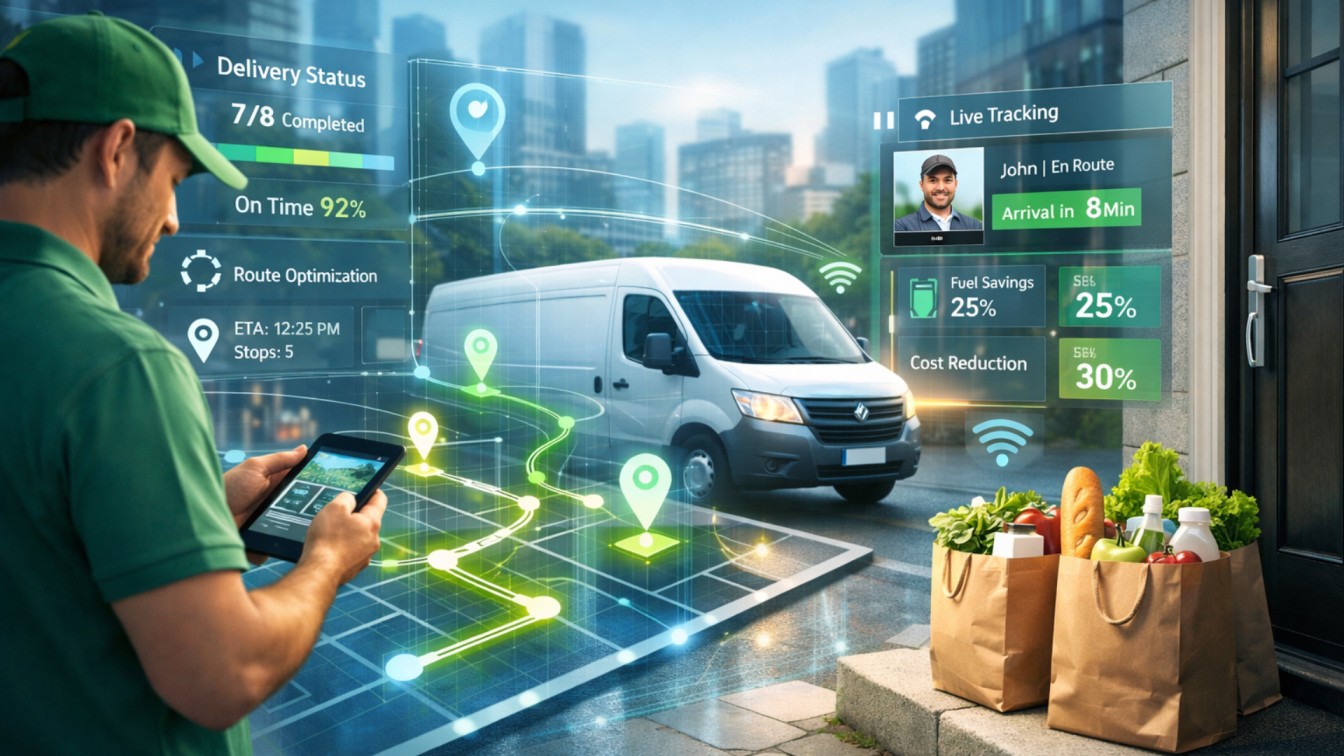
The grocery industry has undergone a massive transformation in recent years, driven by the rapid rise of online shopping and on-demand delivery expectations. Today’s consumers demand fast, accurate, and transparent deliveries, often within hours of placing an order. This shift has made grocery last-mile delivery the most critical and challenging part of the supply chain.
However, managing last-mile operations efficiently is not easy. Businesses often struggle with delivery delays, high operational costs, lack of real-time visibility, and poor route planning. These challenges can directly impact customer satisfaction and profitability.
This is where advanced logistics software development comes into play. Modern technology solutions are helping grocery businesses streamline delivery processes, improve efficiency, and enhance customer experience. Companies like SSTech System are enabling this transformation by offering smart, scalable logistics solutions tailored to evolving market needs.
Understanding Grocery Last-Mile Delivery
Grocery last-mile delivery refers to the final stage of the delivery process, where goods are transported from a distribution center or retail store to the customer’s doorstep. While it may seem like a simple step, it is actually the most complex and cost-intensive part of the logistics chain.
Unlike traditional deliveries, grocery orders are time-sensitive and often include perishable items. Customers expect same-day or even instant delivery, along with real-time updates. Meeting these expectations requires precise coordination, efficient routing, and seamless communication.
Key Challenges in Grocery Last-Mile Delivery
Despite its importance, grocery last-mile delivery comes with several operational challenges:
- Route inefficiencies: Poor route planning leads to delays and increased fuel costs
- Lack of real-time visibility: Businesses struggle to track deliveries and provide updates
- High operational costs: Fuel, labor, and failed deliveries increase expenses
- Delivery failures: Missed or delayed deliveries harm customer trust
- Inventory mismatches: Incorrect stock data can lead to order fulfillment issues
Role of Logistics Software Development in Modern Grocery Delivery
Advanced logistics software development plays a crucial role in overcoming these challenges. It enables businesses to digitize and automate their delivery operations, making them more efficient and scalable.
Custom logistics solutions can integrate with inventory systems, warehouse management tools, and order processing platforms. This ensures seamless coordination across the entire supply chain.
Key capabilities include:
- Automated order processing
- Smart dispatching systems
- Real-time delivery tracking
- Data-driven decision-making
- Integration with third-party platforms
Real-Time Tracking for Better Delivery Visibility
One of the most impactful features of modern logistics software is real-time tracking. It allows both businesses and customers to monitor deliveries as they happen.
With GPS-enabled tracking systems, companies can:
- Provide accurate delivery time estimates
- Reduce customer inquiries
- Improve transparency and trust
- Quickly respond to delays or disruptions
Route Optimization & AI-Powered Dispatching
Efficient route planning is essential for successful grocery delivery. Advanced logistics software uses AI and machine learning to optimize delivery routes based on traffic conditions, distance, and order priority.
Benefits of route optimization include:
- Reduced delivery time
- Lower fuel consumption
- Increased number of deliveries per trip
- Better resource utilization
Enhancing Operational Efficiency
Automation is a game-changer for grocery delivery operations. Logistics software eliminates manual processes and improves coordination between different teams.
Key improvements include:
- Automated order assignment to drivers
- Real-time driver performance tracking
- Reduced human errors
- Faster order processing
Cost Reduction & ROI Improvement
One of the biggest advantages of using logistics software is cost optimization. By improving efficiency and reducing waste, businesses can significantly lower their operational expenses.
Cost-saving benefits include:
- Optimized fuel usage through better routing
- Reduced failed deliveries
- Lower labor costs through automation
- Improved asset utilization
Improving Customer Experience with Technology
Customer experience is a key differentiator in the competitive grocery market. Advanced logistics software helps businesses deliver a seamless and satisfying experience.
Features that enhance customer experience:
- Real-time delivery notifications
- Accurate estimated delivery times (ETAs)
- Easy communication with delivery agents
- Faster and more reliable service
Future Trends in Grocery Last-Mile Delivery
The future of grocery delivery is being shaped by emerging technologies and innovative models. Some key trends include:
- AI and predictive analytics for demand forecasting
- Autonomous delivery vehicles and drones
- Hyperlocal delivery networks for faster service
- Sustainability-focused logistics solutions
Conclusion
Optimizing grocery last-mile delivery is no longer optional, it is essential for survival in today’s fast-paced digital economy. With increasing customer expectations and rising competition, businesses must invest in smarter, more efficient delivery solutions.
Advanced logistics software development provides the tools needed to overcome operational challenges, reduce costs, and enhance customer satisfaction. From real-time tracking to AI-powered route optimization, these solutions are transforming the way grocery deliveries are managed.

 Tayyab Malik
 Sophia Farnendaz