john ryan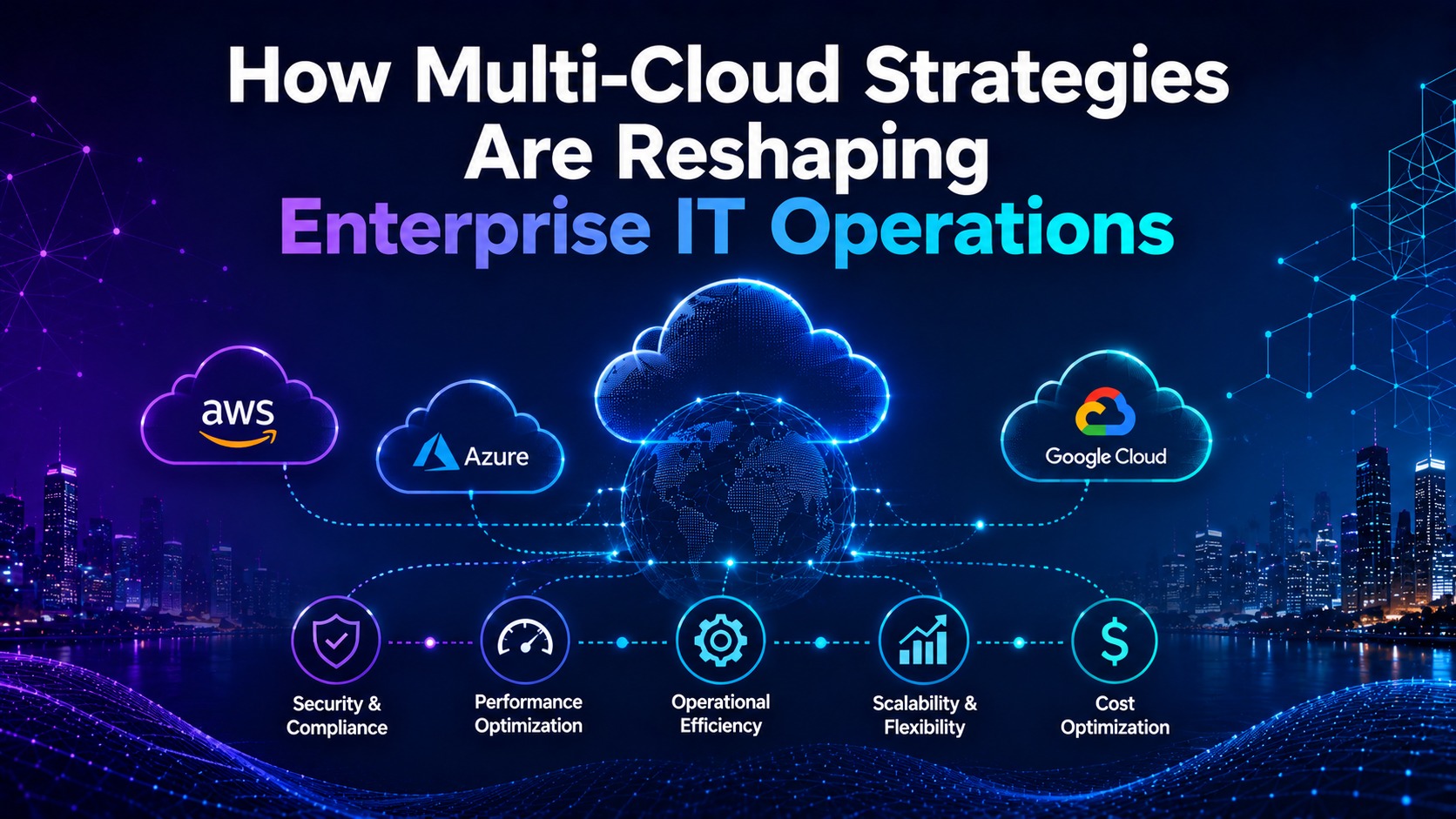
Enterprises are increasingly shifting toward multi-cloud environments as digital transformation initiatives become more complex and data-intensive. Rather than relying on a single cloud provider, organizations are distributing workloads across multiple platforms to improve operational flexibility, business continuity, and infrastructure resilience. This transition is also helping enterprises reduce dependency on individual vendors while improving scalability across global operations.
Industries such as banking, healthcare, retail, manufacturing, and telecommunications are now managing vast volumes of applications and data across hybrid ecosystems. According to a recent multi-cloud management industry analysis, the Global Multi-Cloud Management Market is projected to grow at a CAGR of around 27.76% during 2024–2030, driven by rising cloud adoption and the need for centralized management frameworks.
The Growing Need for Vendor Flexibility
One of the primary reasons organizations are adopting multi-cloud strategies is to avoid vendor lock-in. Enterprises today require the freedom to move workloads between providers based on pricing, performance, compliance, and regional availability. A multi-cloud environment allows businesses to select the most suitable cloud service for each workload rather than relying on a single infrastructure ecosystem.
Cloud flexibility has become especially important for enterprises operating across multiple geographies. Different cloud providers often offer unique strengths in analytics, artificial intelligence, storage, or security. Multi-cloud management platforms help organizations integrate these services while maintaining operational consistency across environments. According to IBM’s cloud technology overview, multi-cloud strategies can help enterprises improve agility and optimize workload placement depending on business needs.
Why Unified Cloud Management Is Becoming Essential
Managing multiple cloud environments individually can create operational complexity. IT teams often struggle with fragmented visibility, inconsistent governance policies, and rising infrastructure costs when workloads are spread across several providers. As a result, organizations are increasingly adopting unified cloud management platforms to centralize monitoring, automation, and security controls.
Unified management solutions enable businesses to oversee applications, storage, compliance, and performance metrics through a single interface. This approach improves operational efficiency while reducing the burden on internal IT teams. It also allows enterprises to standardize governance policies across cloud providers, minimizing risks associated with configuration errors or compliance gaps.
The growing focus on centralized cloud governance is further accelerating investments in automation tools capable of handling workload orchestration and real-time infrastructure optimization. Many enterprises are now prioritizing cloud-native management platforms that support hybrid and distributed computing environments.
Cybersecurity Concerns Are Accelerating Adoption
Security remains one of the most significant drivers behind multi-cloud management adoption. As organizations expand digital operations, cyber risks associated with data breaches, ransomware attacks, and unauthorized access continue to rise. Enterprises are increasingly distributing workloads across multiple cloud providers to strengthen resilience and minimize single points of failure.
Multi-cloud management solutions help businesses implement unified security policies, identity management systems, and threat detection mechanisms across different environments. This centralized visibility is becoming critical as enterprises face growing regulatory scrutiny regarding data privacy and cybersecurity standards.
Organizations are also using multi-cloud architectures to improve disaster recovery capabilities. By storing applications and sensitive data across multiple platforms, businesses can maintain operational continuity even if one cloud environment experiences disruptions or outages. The Cybersecurity and Infrastructure Security Agency (CISA) has highlighted the importance of strong cloud security governance as enterprises increasingly adopt distributed cloud infrastructures.
AI and Data Analytics Are Expanding Cloud Complexity
The rapid adoption of artificial intelligence, machine learning, and advanced analytics is adding new layers of complexity to enterprise cloud ecosystems. AI-driven applications require scalable infrastructure, high-performance computing, and flexible storage systems capable of processing massive datasets in real time.
Many organizations are using multiple cloud providers to support specialized AI workloads while optimizing operational costs. Some cloud platforms may offer stronger AI development capabilities, while others provide more efficient data storage or edge computing services. Multi-cloud management platforms enable enterprises to coordinate these environments efficiently while maintaining consistent governance standards.
As enterprises continue integrating AI into customer service, predictive maintenance, cybersecurity, and supply chain operations, demand for intelligent cloud orchestration tools is expected to increase further. Automation features within multi-cloud management systems are becoming essential for balancing workloads, monitoring performance, and controlling infrastructure expenses.
Asia-Pacific Emerging as a High-Growth Region
Asia-Pacific is becoming a major growth region for multi-cloud adoption due to rapid digitalization, expanding internet penetration, and strong enterprise technology investments. Countries such as India, China, Japan, and South Korea are witnessing increasing demand for scalable cloud infrastructure as businesses modernize operations.
Government-backed digital initiatives are also contributing to cloud ecosystem expansion across the region. In India, programs focused on digital transformation and smart infrastructure development are encouraging organizations to adopt cloud-based operational models. Meanwhile, enterprises in China are rapidly integrating AI, IoT, and big data technologies that require sophisticated cloud management capabilities.
Telecommunications companies across Asia-Pacific are additionally investing in edge computing and 5G infrastructure, further increasing the need for efficient multi-cloud orchestration systems. These developments are creating long-term opportunities for cloud management providers offering automation, security, and workload optimization solutions.
The Future of Enterprise Cloud Operations
As enterprise IT environments continue evolving, multi-cloud management is becoming a foundational component of digital infrastructure strategy. Organizations are no longer viewing cloud adoption as a standalone technology upgrade but rather as part of a broader operational transformation focused on resilience, scalability, and intelligent automation.
The growing convergence of AI, cybersecurity, edge computing, and hybrid infrastructure is expected to further increase the complexity of enterprise cloud ecosystems. Businesses will likely continue investing in unified management platforms capable of simplifying governance, improving visibility, and optimizing cloud performance across distributed environments.
With enterprises prioritizing operational continuity and digital agility, multi-cloud management platforms are expected to play an increasingly central role in supporting future-ready IT operations across industries worldwide.


 Jhon Kary