KLBD Kosher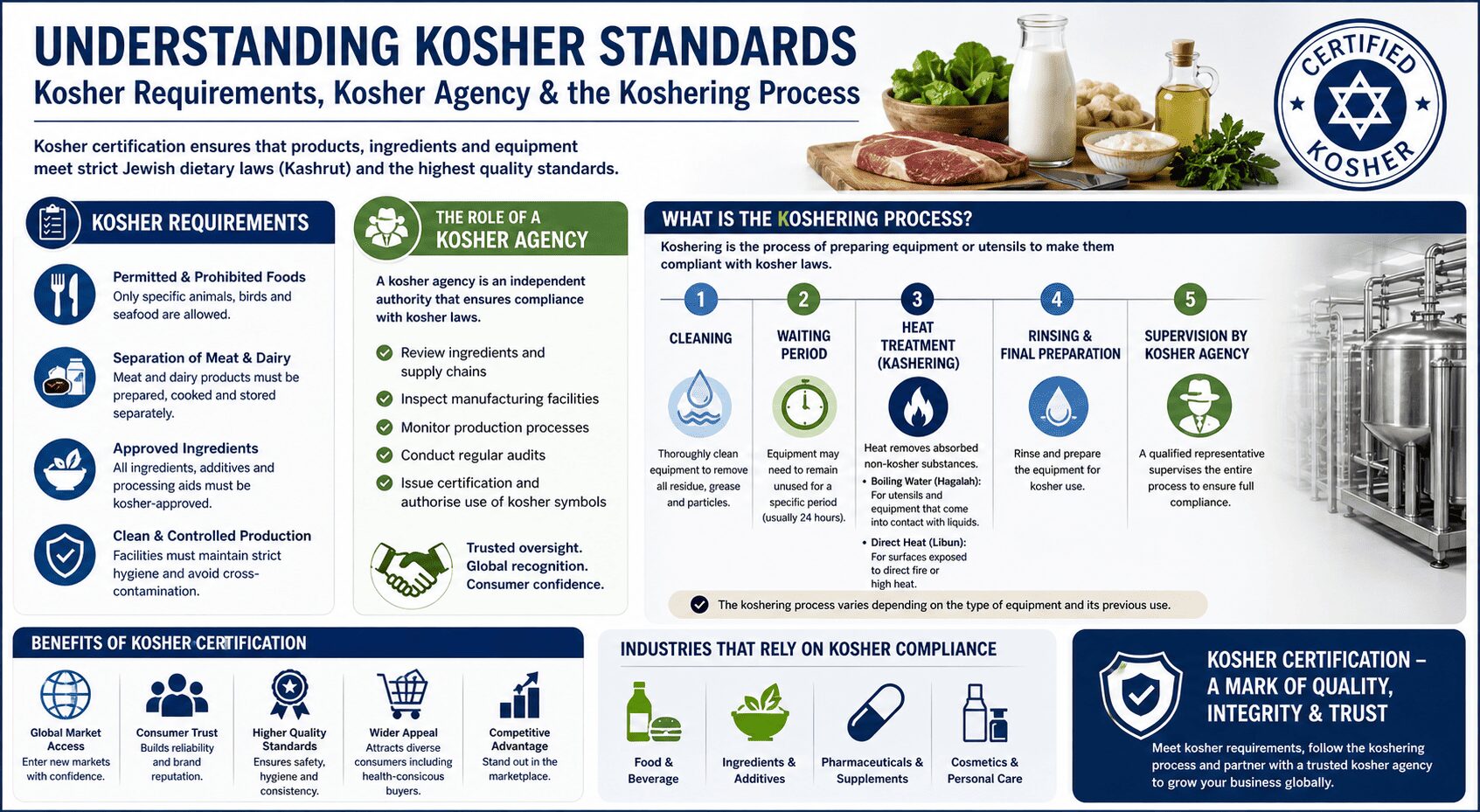
As global consumers become more conscious about food quality, sourcing, and transparency, kosher standards are gaining increasing importance. Businesses across industries are turning to kosher compliance not only to meet religious expectations but also to enhance product credibility and expand into international markets.
Understanding kosher requirements, working with a reliable kosher agency, and learning what is the koshering process can help businesses unlock new opportunities and build lasting consumer trust.
What Are Kosher Requirements?
Kosher requirements are a set of dietary laws derived from Jewish tradition, known as kashrut. These rules govern which foods are permitted, how they must be processed, and how they should be handled.
Some of the key kosher requirements include:
1. Permitted and Prohibited Foods
Certain foods are allowed (kosher), while others are strictly prohibited. For example:
- Only specific animals that chew the cud and have split hooves are permitted
- Seafood must have fins and scales
- Certain birds are allowed, while others are not
2. Separation of Meat and Dairy
One of the most well-known kosher requirements is the strict separation of meat and dairy products. This includes:
- Separate ingredients
- Separate cooking equipment
- Separate storage and preparation processes
3. Clean and Approved Ingredients
All ingredients used in a product must be kosher-certified or approved. Even small additives or processing aids must comply with kosher standards.
4. Hygienic and Controlled Production
Manufacturing facilities must maintain strict cleanliness and avoid cross-contamination with non-kosher substances.
These requirements ensure that kosher-certified products meet high standards of quality, safety, and transparency.
What Does a Kosher Agency Do?
A kosher agency is an organization responsible for certifying that products and production processes meet kosher requirements. These agencies act as independent authorities, providing credibility and assurance to both businesses and consumers.
Key Responsibilities of a Kosher Agency:
- Reviewing ingredients and supply chains
- Inspecting manufacturing facilities
- Monitoring production processes
- Conducting regular audits and inspections
- Issuing kosher certification and symbols
A reputable kosher agency employs trained inspectors and experts who ensure compliance at every stage. Their certification is widely recognized, making it easier for businesses to enter global markets.
What Is the Koshering Process?
One of the most important aspects of kosher compliance is understanding what is the koshering process. Koshering refers to the preparation and treatment of equipment, utensils, or food to make them compliant with kosher laws.
Why Is Koshering Necessary?
Equipment used for non-kosher or mixed (meat and dairy) production cannot be used for kosher production unless it undergoes proper koshering. This prevents contamination and ensures compliance with kosher requirements.
Steps Involved in the Koshering Process
The koshering process may vary depending on the type of equipment and its previous use, but it generally includes the following steps:
1. Cleaning
All equipment must be thoroughly cleaned to remove any visible residue, grease, or particles. This is a critical first step before any koshering method is applied.
2. Waiting Period
In many cases, equipment must remain unused for a specific period (usually 24 hours) before koshering begins. This ensures that any absorbed flavors become inactive.
3. Heat Treatment (Kashering)
Heat is used to remove absorbed non-kosher substances. The method depends on how the equipment was used:
- Boiling Water (Hagalah): Used for utensils and equipment that come into contact with liquids
- Direct Heat (Libun): Used for surfaces exposed to direct fire or high heat
4. Rinsing and Final Preparation
After heat treatment, equipment is rinsed and prepared for kosher production.
5. Supervision by a Kosher Agency
A qualified representative from a kosher agency supervises the entire process to ensure it meets kosher standards.
Benefits of Following Kosher Requirements
Adhering to kosher requirements and working with a trusted kosher agency offers several business advantages:
1. Improved Product Quality
Kosher standards require strict control over ingredients and processes, leading to higher overall product quality.
2. Increased Consumer Trust
Consumers recognize kosher certification as a symbol of reliability and transparency.
3. Global Market Access
Many international markets prefer or require kosher-certified products, making it easier to expand globally.
4. Compliance and Consistency
Regular audits by a kosher agency ensure consistent quality and compliance over time.
Industries That Rely on Kosher Compliance
Kosher requirements are relevant across multiple industries, including:
- Food and beverage manufacturing
- Ingredients and flavor production
- Pharmaceuticals and dietary supplements
- Cosmetics and personal care products
This wide applicability highlights the importance of understanding kosher standards in today’s business environment.
Choosing the Right Kosher Agency
Selecting the right kosher agency is crucial for successful certification. Businesses should consider:
- Global recognition and acceptance
- Industry expertise
- Transparent processes
- Ongoing support and guidance
A reliable agency not only ensures compliance but also helps businesses navigate the complexities of kosher certification efficiently.
Final Thoughts
Understanding kosher requirements, partnering with a reputable kosher agency, and learning what is the koshering process are essential steps for businesses aiming to succeed in global markets.
Kosher certification is no longer limited to religious needs—it has become a universal symbol of quality, safety, and trust. By embracing these standards, businesses can enhance their reputation, reach new audiences, and achieve sustainable growth.


 Ammar Saleem