james Michle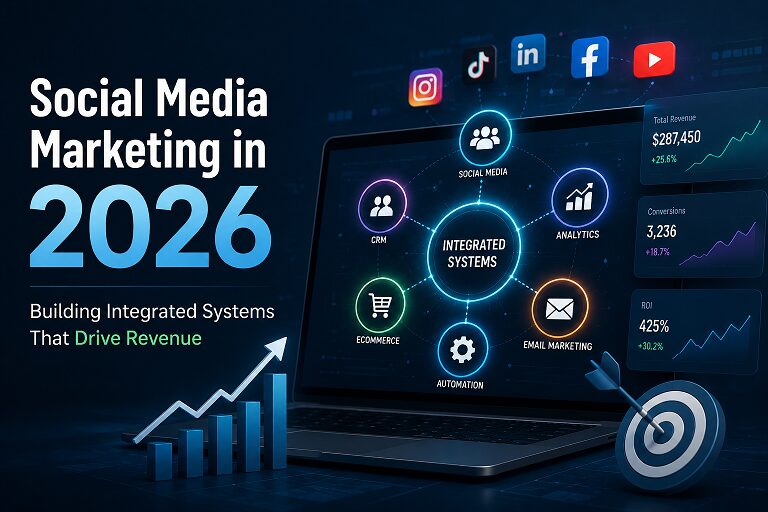
The social media landscape has undergone a fundamental transformation by 2026. The era of random posting schedules and vanity metric chasing is firmly behind us. Today’s winning brands treat social media as a full-funnel channel—discovery content at the top, community and social proof in the middle, and conversion paths that respect how people actually behave on each platform. This isn’t about posting more; it’s about building systems that connect creative testing, audience insights, paid amplification, and attribution without burning out your team.
What separates successful social media marketing in 2026 strategies from failing ones is the integration of organic and paid efforts into one unified system. Brands that treat these as separate departments with competing goals are losing ground to competitors who understand that organic posts test hooks and narratives cheaply, while paid campaigns scale winners with precise audience controls. Without a feedback loop between teams, paid budgets amplify mediocre creative and organic channels starve for assets. The integration is not optional—it is the foundation of sustainable growth.
Platform Selection and Channel Fit
Audience research on social platforms has evolved far beyond basic demographics in 2026. Successful brands use platform analytics, comment mining, and customer interviews to understand the pains, objections, and language customers actually use. This deeper intelligence reveals what people truly care about, not just who they are on paper.
Building personas per platform is essential because LinkedIn decision-makers differ dramatically from TikTok discoverers. A professional evaluating B2B software wants ROI case studies and data-backed proof points. A consumer scrolling through short-form video wants fast visual demonstrations and emotional resonance. Tailoring your proof points to each platform’s unique audience psychology determines whether your content stops the scroll or gets scrolled past.
Documenting owners, timelines, and success metrics for each platform ensures your team can iterate with evidence instead of opinions. This documentation creates institutional knowledge that survives team changes and prevents the chaos of channels multiplying without clear accountability.
Organic and Paid as One Marketing System
The most impactful shift in social media marketing for 2026 is the unification of organic and paid efforts into a single cohesive system. Organic content serves as your testing ground—experimenting with hooks, narratives, and creative formats at low cost. Paid campaigns then take the winning concepts and scale them with precise audience controls.
Reporting dashboards must combine platform metrics with business outcomes: CPA, ROAS, pipeline influenced, and customer acquisition cost by channel. Ranking teams on vanity metrics alone—likes, shares, follower counts—creates misaligned incentives that hurt profitability. When marketing teams are evaluated on business outcomes rather than engagement metrics, every decision becomes more strategic.
Weekly rituals should include reviewing creative fatigue, frequency caps, and audience overlap between campaigns. These regular check-ins prevent budget waste and ensure your messaging stays fresh. Creative fatigue happens faster than most marketers realize—what performed well last month may be ignored today. Frequency caps protect your audience from overexposure, while monitoring audience overlap prevents different campaigns from competing against each other for the same impressions.
Audience Insights Beyond Demographics
Understanding your audience in 2026 requires going deeper than age, location, and income. The most valuable insights come from analyzing the language customers actually use in comments, reviews, and customer service interactions. These linguistic patterns reveal purchase triggers, objections, and the emotional drivers that traditional demographic data misses.
For B2B brands on LinkedIn, this means understanding the specific business challenges decision-makers face and the metrics they care about. For consumer brands on TikTok or Instagram, it means grasping the cultural moments, humor, and visual language that resonate with their audience. The same product requires completely different messaging approaches depending on where and how it is being discovered.
Community management has become a primary source of audience intelligence in 2026. Communities surface objections that ads miss—feeding insights back to product development and sales teams. When community managers escalate product issues and highlight user-generated content with permission, they create a continuous feedback loop that improves both marketing and product quality.
Creative Testing That Improves ROAS
Systematic creative testing is the engine that drives profitable social media marketing in 2026. The approach must be methodical: vary hooks in the first two seconds of video, test static images against carousel formats, and rotate calls-to-action aligned to each funnel stage. These first two seconds determine whether someone watches or scrolls—making hook variation one of the highest-leverage testing activities available.
Establishing clear kill criteria prevents underperforming ads from draining budget. Too many marketing teams let mediocre creative run too long because they lack clear decision rules. Define specific performance thresholds—if an ad hasn’t achieved X CTR or Y conversion rate within Z impressions, it gets paused. This discipline preserves budget for concepts that actually work.
Documenting winning creative in a playbook that other teams can reuse creates compounding returns. When a proven hook, visual style, or messaging framework is captured and shared, the entire organization benefits from the learning. This documentation transforms creative testing from a one-off activity into a scalable capability.
Campaign Structure for Full-Funnel Social
Full-funnel social media marketing requires different creative approaches for each stage of the buyer journey. Top-of-funnel content focuses on discovery—entertaining, educating, or inspiring people who may not yet know they have a problem your product solves. Middle-of-funnel content provides proof—case studies, testimonials, product demonstrations that build trust and consideration. Bottom-of-funnel content drives conversion—offers, trials, demos, and clear calls-to-action.
Campaign structure should reflect this funnel reality, with separate budget allocations, creative strategies, and success metrics for each stage. Brand building campaigns and performance campaigns require separation while sharing creative insights between them. The insights from what works in brand building should inform performance creative, and vice versa.
Social commerce features continue expanding in 2026, but friction varies significantly by category. For low-consideration impulse purchases, streamlined in-app checkout can drive immediate sales. For high-consideration products, social should start conversations that continue via email or sales follow-up—not force instant purchase decisions. Simplifying checkout paths, showing real inventory, and setting shipping expectations directly in captions—not only on landing pages—reduces friction at every step.
Community as a Feedback Loop
Community management is marketing in 2026, not an administrative afterthought. Brands that actively manage their communities gain competitive advantages that cannot be replicated through advertising alone.
Responding to comments within service-level targets builds trust and demonstrates that the brand values its audience. Slow or nonexistent responses signal that the brand doesn’t care—a reputation killer in an era where consumers research brands extensively before purchasing. Escalating product issues quickly and transparently turns potential crises into opportunities to demonstrate customer commitment.
Highlighting user-generated content with permission creates powerful social proof that paid advertising cannot buy. When real customers share their experiences, it carries more weight than any brand-created content. The key is securing proper permissions and giving credit—ethical practices that build long-term community trust.
Moderation policies should be public and enforced consistently. Clear guidelines about acceptable behavior protect community quality and prevent toxic dynamics from driving away valuable participants. When policies are transparent and consistently applied, communities become safe spaces for genuine conversation.
Influencer Partnerships That Convert
Influencer partnerships in 2026 work best when authenticity beats reach. Micro-influencers with engaged niches consistently outperform celebrities for specific product categories because their audiences trust them more. A recommendation from a trusted micro-influencer feels personal; a celebrity endorsement feels purchased.
Contracts must cover disclosure requirements, usage rights, and whitelisting for paid amplification. Whitelisting—giving brands permission to run the influencer’s content as paid ads—extends the value of the partnership far beyond the initial post. Without whitelisting rights, you miss the opportunity to scale what works.
Tracking unique links or codes per partner provides clear attribution instead of guessing impact from likes alone. When you know exactly which partner drove which sale, you can optimize your influencer budget based on actual return rather than perceived popularity. This data-driven approach separates effective partnerships from expensive vanity projects.
Social Commerce and Considered Purchases
Social commerce has matured significantly by 2026, but the approach must match the product category. For impulse purchases, frictionless in-app checkout works well. For considered purchases—products that require research, comparison, or consultation—social media serves as the starting point of a longer journey.
Simplify checkout paths wherever possible. Every extra click, every form field, every redirect reduces conversion rates. Show real inventory availability to prevent disappointment and abandoned carts. Set clear expectations about shipping times and costs directly in captions—not buried on landing pages. When customers know what to expect, they convert more confidently.
For high-consideration products, use social to start conversations that continue via email or direct sales outreach. The goal isn’t to force an immediate sale but to begin a relationship that leads to one. This approach respects the buyer’s decision-making process and builds trust through helpful, low-pressure engagement.
Crisis Communication on Social
Every brand faces crises, and social media amplifies both the risk and the opportunity. Crisis preparedness includes holding statements ready, escalation trees defined, and the ability to pause scheduled posts during sensitive news cycles. When a crisis hits, speed and appropriateness of response determine public perception.
Archiving controversial campaigns quickly if they become tone-deaf prevents further damage. The faster you recognize misalignment and act, the less reputational harm occurs. Post-crisis retrospectives should update brand voice guidelines with lessons learned. Every crisis contains valuable insights that strengthen future decision-making.
Community management during crises becomes even more critical. Responding to concerns, acknowledging mistakes, and demonstrating genuine commitment to improvement can transform critics into advocates. Silence or defensiveness does the opposite.
Reporting That Connects to Revenue
The ultimate measure of social media marketing success in 2026 is revenue impact, not engagement metrics. Reporting dashboards must combine platform metrics with business outcomes: CPA, ROAS, pipeline influenced, and customer acquisition cost by channel. When leadership sees social media’s contribution to pipeline and revenue, investment follows.
Avoid ranking teams on vanity metrics alone. Likes and shares feel good but don’t pay bills. When teams know they are evaluated on business outcomes, their decisions become more strategic. They allocate budget to what drives revenue, not what generates the most likes.
Weekly rituals of reviewing creative fatigue, frequency caps, and audience overlap between campaigns keep execution aligned with strategy. These regular check-ins prevent drift and ensure continuous optimization. The best strategies fail without disciplined execution; these rituals provide the discipline.
Sustainable Production for Social Teams
Burnout destroys consistency, and inconsistency destroys social media performance. Sustainable production means batching content creation, repurposing long-form assets into short-form formats, and protecting creator well-being. When your team is exhausted, creative quality suffers and posting cadences become erratic.
Building realistic posting cadences backed by capacity planning prevents the feast-or-famine cycle that plagues so many social teams. Know how much content your team can actually produce at quality standards, and commit only to what you can deliver consistently.
Tooling—schedulers, asset libraries, approval workflows—reduces chaos as channels multiply. The right tools eliminate friction, not create it. Choose technology that simplifies your workflow rather than adding complexity. When systems work smoothly, creativity flourishes.
Conclusion
Social media marketing in 2026 demands integration, discipline, and a relentless focus on business outcomes. The brands winning attention treat social as a full-funnel channel where organic and paid efforts work as one system. They invest in audience insights that go beyond demographics. They test creative systematically and scale what works. They treat community management as marketing. And they measure success by revenue impact, not vanity metrics.
The strategies outlined here—platform selection, unified organic and paid systems, deep audience insights, systematic creative testing, full-funnel campaign structure, community feedback loops, authentic influencer partnerships, thoughtful social commerce, crisis preparedness, revenue-connected reporting, and sustainable production—form a complete framework for social media success in 2026.
Implementation starts with choosing one area to improve, documenting your approach, and iterating with evidence instead of opinions. The brands that adopt these integrated systems will not just survive the evolving social media landscape—they will thrive within it.
Frequently Asked Questions
1. What is the biggest difference between social media marketing in 2026 versus previous years?
The biggest shift is the integration of organic and paid social into one unified system rather than treating them as separate disciplines. Brands now use organic content to test hooks and narratives cheaply, then scale winning concepts through paid campaigns with precise audience controls. Reporting has also evolved to focus on business outcomes like CPA and ROAS rather than vanity metrics.
2. How can small teams compete with larger brands on social media in 2026?
Small teams can compete by focusing on sustainable production—batching content, repurposing long assets into shorts, and protecting creator well-being. They should also leverage micro-influencer partnerships, which often outperform celebrity endorsements for specific categories. Building realistic posting cadences backed by capacity planning prevents burnout and maintains consistency.
3. Why is community management considered marketing in 2026?
Community management surfaces objections that ads miss and feeds insights back to product and sales teams. Responding to comments within service-level targets, escalating product issues, and highlighting user-generated content builds trust and provides social proof that advertising cannot replicate. Communities are now primary sources of customer intelligence.
4. What metrics should social media teams be measured on in 2026?
Teams should be measured on business outcomes: CPA (cost per acquisition), ROAS (return on ad spend), pipeline influenced, and customer acquisition cost by channel. Ranking teams on vanity metrics alone—likes, shares, follower counts—creates misaligned incentives and should be avoided.
5. How does creative testing work in a full-funnel social media strategy?
Creative testing should be systematic: vary hooks in the first two seconds of video, test static images vs carousel formats, and rotate CTAs aligned to each funnel stage. Establish clear kill criteria so underperforming ads don’t drain budget, and document winning creative in a playbook that other teams can reuse. This systematic approach transforms creative testing from a one-off activity into a scalable capability.

 Kiran Aggarwal
 Approvals Dubai