Mindy Hausler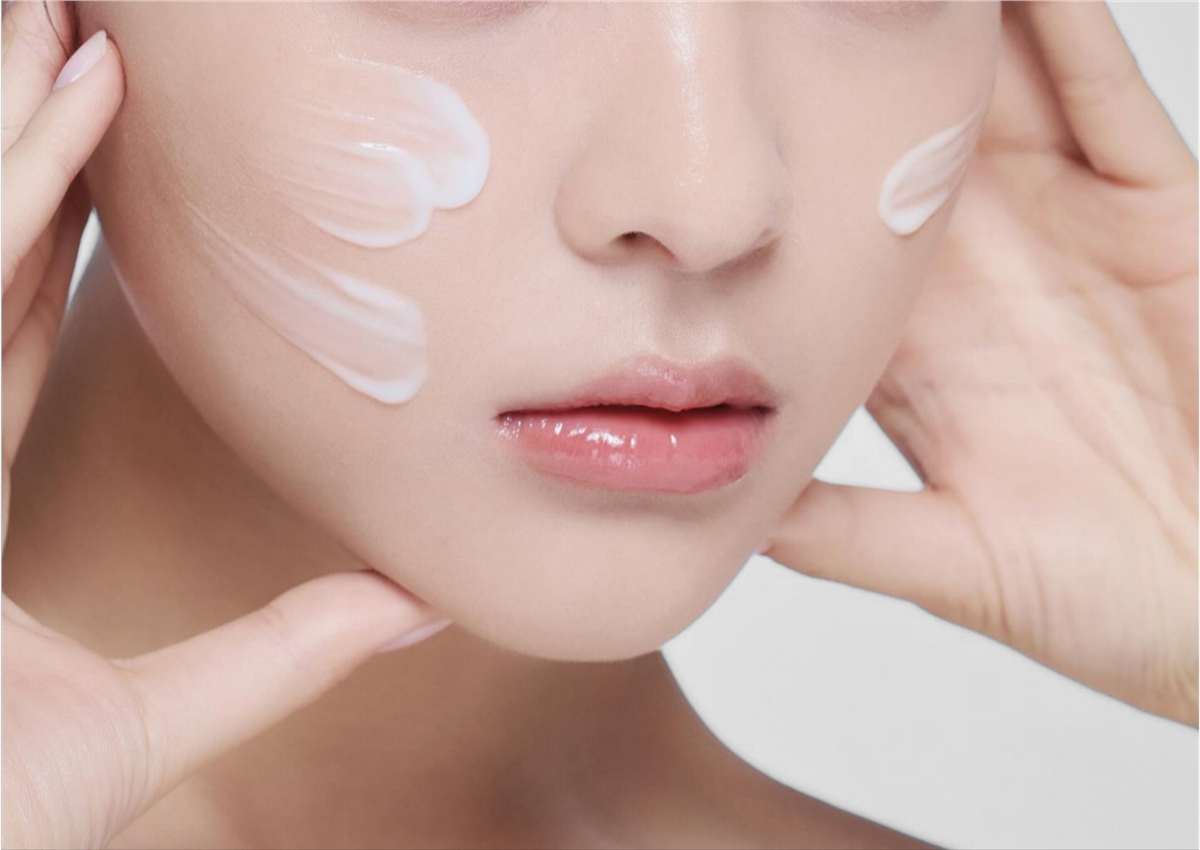
The Root Causes: Why Creams Turn White
The development of high-performance topical emulsions is a sophisticated exercise in balancing thermodynamic instability with kinetic stabilization. Within the specialized domain of cosmetic research and development, formulators frequently encounter the “soaping effect”—an aesthetic and sensory anomaly where a white, streaky, or foamy film appears on the skin during the application and rub-out phase of a cream or lotion. While this phenomenon, technically known as microfoaming, generally does not compromise the biochemical efficacy or the long-term structural integrity of the formulation, it serves as a significant hurdle to consumer acceptance and perceived product luxury. For formulators, understanding the underlying physicochemical drivers of soaping is essential to providing the technical guidance necessary to engineer superior skin care experiences.
Fundamentals of the Soaping Phenomenon
The soaping effect is fundamentally a manifestation of air entrapment and stabilization within the emulsion matrix during mechanical agitation. In a standard oil-in-water (O/W) emulsion, the system is composed of microscopic oil droplets dispersed throughout a continuous aqueous phase, stabilized by an interfacial layer of surfactants or emulsifiers. However, emulsions are inherently thermodynamically unstable systems because the creation of the oil-water interface requires the input of work against the interfacial tension.
During the “rub-out” process on the skin, the consumer applies mechanical shear, which significantly increases the surface area of the system. If the formulation contains an excess of surfactant molecules that are not fully utilized in stabilizing the oil droplets, these molecules migrate to the newly created air-liquid interface, effectively stabilizing air bubbles introduced by the rubbing motion.
The stabilization of these micro-bubbles is further governed by the rheological properties of the interfacial film. In a soaping emulsion, the excess surfactants create a viscoelastic interfacial stress that prevents the immediate drainage and rupture of the thin liquid films surrounding the air bubbles, leading to a persistent white appearance.
Molecular Imbalances: The Emulsifier-to-Oil Ratio
The most prevalent cause of the soaping effect is an optimized but imbalanced ratio of emulsifier to the dispersed oil phase. However, if the concentration of the emulsifier is excessive—often a risk when formulators attempt to guarantee stability in low-viscosity systems—the “homeless” emulsifiers seek other space options. These molecules often aggregate around air bubbles captured during homogenization or application. Research indicates that smaller oil droplets, which provide a larger total surface area per unit volume, can help mitigate soaping by consuming a higher percentage of the available emulsifier. Conversely, formulations with large oil droplets or a low total oil phase volume (below 10–15%) are highly susceptible to microfoaming.
The Hydrophile-Lipophile Balance (HLB) value is a critical metric in this selection process. Emulsifiers with high HLB values (10–18), such as Polysorbate 80 or Ceteareth-20, are strongly hydrophilic and exhibit a higher tendency to stabilize the air-water interface in O/W systems. To counteract this, formulators often incorporate low-HLB co-emulsifiers (HLB 3–6), such as Glyceryl Stearate or Sorbitan Stearate, which act as “anti-foaming” agents by reducing the overall HLB of the surfactant system and destabilizing the micro-foam.
| HLB Value Range | Function in Formulation | Influence on Soaping |
|---|---|---|
| 3.0 – 6.0 | W/O Emulsifiers / Anti-foaming | Suppresses micro-foam formation |
| 7.0 – 9.0 | Wetting Agents | Moderate propensity to soap |
| 10.0 – 13.0 | O/W Emulsifiers | High propensity to soap |
| 14.0 – 18.0 | Solubilizers / High-HLB O/W | Extremely high propensity to soap |
The Role of the Lipid Matrix and Spreading Dynamics
The chemical nature and physical properties of the oil phase significantly influence the rub-out profile of the emulsion. Most vegetable oils, such as almond or sunflower oil, are polar in nature. In alkaline environments—such as on skin with a compromised barrier or after exposure to alkaline soaps—these polar oils can undergo partial saponification, which directly contributes to the formation of a soapy, white film. Furthermore, vegetable oils often have a higher surface tension than synthetic emollients, making them less effective at disrupting air bubbles.
To resolve these “pain points,” formulators often replace or complement polar oils with low-viscosity, non-polar, or branched-chain esters and hydrocarbons. Isopropyl Myristate (IPM), an ester of isopropanol and myristic acid, is widely utilized due to its low surface tension and excellent spreadability. IPM acts as a skin penetration enhancer by disrupting the lipid bilayer of the stratum corneum, which allows the emulsion to be absorbed more rapidly, thereby reducing the time window for the soaping effect to be visible.
Ethylhexyl Palmitate is another versatile emollient known for its “mid-feel” during rub-out. It provides slip and lubricity, serving as an anti-tack agent in non-occlusive creams and lotions. By improving the texture of the emulsion during rub-out, these esters ensure a smoother transition from the bulk product to a thin, transparent film on the skin.
| Emollient Type | Spreadability | Sensory Profile | Impact on Soaping |
|---|---|---|---|
| Vegetable Oils | Low to Medium | Greasy/Heavy | High; can saponify in alkaline conditions |
| Isopropyl Myristate | Very High | Dry/Silky | Low; acts as a solvent and spreads quickly |
| Ethylhexyl Palmitate | Medium | Rich/Velvety | Moderate; ideal mineral oil alternative |
| Isoamyl Cocoate | High | Lightweight | Low; natural silicone alternative |
Thickening Agents, Gums, and Air Entrapment
Rheology modifiers and stabilizers, while essential for the kinetic stability of emulsions, can inadvertently exacerbate the soaping effect. Natural gums, such as xanthan gum, are known to trap air bubbles within the aqueous phase due to the formation of a high-viscosity network. If xanthan gum is used at concentrations exceeding 0.5%, the aeration introduced during homogenization becomes difficult to remove, resulting in a product that “soaps” upon application.
Furthermore, fatty alcohols such as Cetearyl Alcohol or Cetyl Alcohol are used to build viscosity by forming a lamellar liquid crystalline phase. However, lab studies have demonstrated that while pure emulsifiers often do not soap alone, the combination of emulsifiers and fatty alcohols can create significant micro-foaming. In these cases, the fatty alcohol stabilizes the thin liquid films of the foam bubbles.
A strategic solution involves the use of synthetic polymers, such as Acrylates/C10-30 Alkyl Acrylate Crosspolymer, which can provide stability and viscosity without the foaming tendencies of traditional surfactants and gums. These polymers stabilize oil droplets through a steric mechanism rather than just decreasing interfacial tension, which allows for a lower total concentration of soap-prone emulsifiers.
Chemical Solutions: Silicones and Defoaming Agents
The most effective traditional method for eliminating the soaping effect is the addition of silicone oils, such as dimethicone. Silicones are unique in cosmetic chemistry for their extremely low surface tension and low coefficient of friction (typically 0.02–0.05). As defoamers, silicone droplets migrate to the air-water interface of a bubble. Because silicones are immiscible with the surfactant film, they create “weak spots” in the bubble wall, causing it to rupture and collapse instantly.
Dimethicone (polydimethylsiloxane) also provides functional benefits beyond defoaming, such as filling in fine lines and wrinkles to provide an immediate smoothing effect. Volatile silicones, like Cyclopentasiloxane (D5), act as fast-drying carriers that leave a light, powdery feel on the skin. However, as the industry moves toward “greener” and silicone-free formulations due to environmental and regulatory scrutiny, formulators must seek out alternatives.
Alfa Chemistry provides several specialty ingredients that offer silicone-like performance without the associated environmental drawbacks. PPG-3 Benzyl Ether Myristate (CAS 642443-86-5) is a high-performance emollient ester specifically designed to eliminate undesirable whitening and soaping effects. Unlike traditional silicones, it is non-volatile and helps stabilize emulsions with high silicone loads or pigment concentrations while providing a silicone-like shine and feel. It is particularly valuable in sunscreens for wetting solid UV filters and preventing the “white cast” often associated with mineral filters.
| Silicone Alternative | Chemical Basis | Key Benefit |
|---|---|---|
| PPG-3 Benzyl Ether Myristate | Synthetic Ester | Prevents soaping, improves UV filter wetting |
| Isoamyl Laurate | Natural Ester | Very light feel, fast spreading |
| Hemisqualane | Hydrocarbon | Sustainable replacement for D5 |

 rayde nalice
 Zavin Clark