Nirwana AI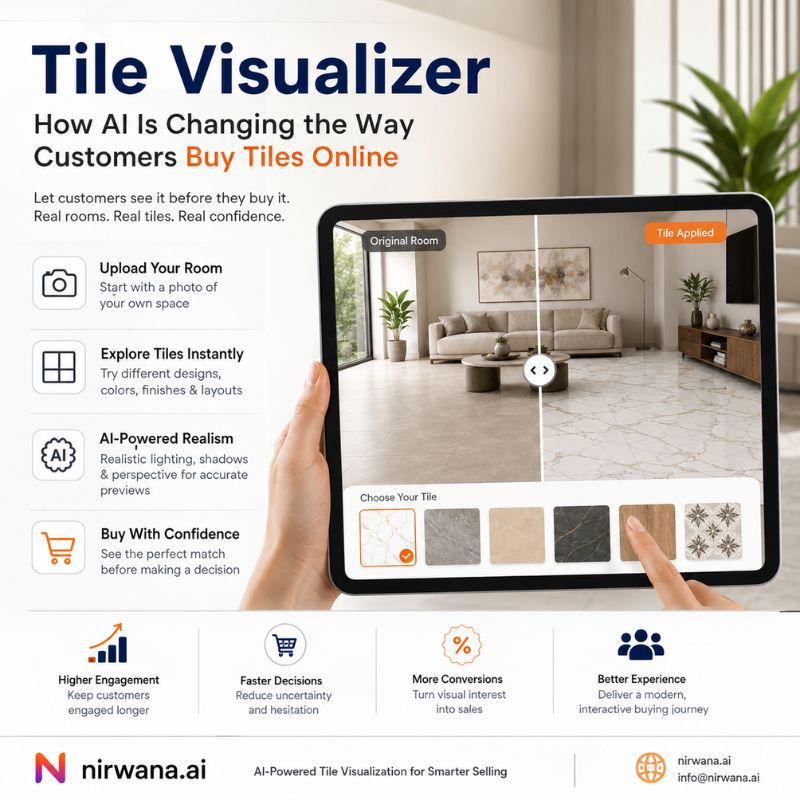
When customers shop for tiles, they usually struggle with one major problem — they cannot truly imagine how the tile will look in their own space. A tile may look beautiful in a showroom or catalog, but once installed inside a kitchen, bathroom, living room, or outdoor area, the final result can feel completely different.
That uncertainty slows down decisions, creates confusion, and often causes buyers to postpone purchases.
This is exactly why the demand for a modern tile visualizer is growing rapidly across the tile industry.
Today’s customers expect more than static catalogs and sample images. They want to upload a photo of their room, apply different tile designs instantly, and see realistic previews before making a purchase. For tile brands, retailers, and distributors, this shift is changing the way products are sold online and inside showrooms.
A smart tile visualizer helps bridge the imagination gap between browsing and buying.
Why Traditional Tile Selling Methods Are No Longer Enough
For years, tile businesses relied on physical showrooms, printed catalogs, and sample boards to help customers make decisions. While these methods still have value, they also come with limitations.
Customers often face questions like:
• Will this tile make my room look smaller?
• Will the finish look too glossy under my lighting?
• Does this color work with my furniture?
• Should I choose a larger tile size or smaller pattern?
• How will the grout lines look after installation?
Without seeing the final result clearly, buyers hesitate.
This hesitation directly affects sales teams and dealers. Even when customers love a product, they frequently say, “Let me think about it,” simply because they are unsure about the outcome.
A tile visualizer solves this problem by giving customers a realistic preview before they buy.
How a Tile Visualizer Improves the Buying Experience
The biggest advantage of a tile visualizer is confidence.
Instead of asking customers to imagine the final look, brands can now show it instantly.
Customers can upload their own room photos and test multiple tile designs in seconds. They can compare colors, finishes, sizes, layouts, and patterns without physically installing anything.
This creates a much smoother buying journey.
For example, a homeowner renovating a bathroom can instantly compare matte beige tiles, marble-look porcelain, and dark textured finishes on the same wall. Instead of visiting multiple stores or requesting physical samples, they can make faster decisions from their phone or laptop.
The experience feels interactive, practical, and highly personalized.
Why Tile Brands Are Investing in AI Visualization
The tile industry has become highly competitive. Most brands already offer large collections, premium designs, and quality products. The real difference now comes from customer experience.
This is where AI-powered visualization is becoming a major advantage.
A modern tile visualizer does more than place a flat image onto a room. Advanced AI systems understand surfaces, walls, floors, lighting conditions, angles, and perspective. This creates previews that look realistic and natural.
Brands using AI visualization are seeing benefits such as:
• Higher customer engagement
• Longer website session times
• Faster buying decisions
• Better lead quality
• Increased showroom conversions
• Reduced customer confusion
• More confidence in premium product sales
The visual experience itself becomes a sales tool.
Real-World Example of How Visualization Impacts Sales
Imagine a customer searching for living room floor tiles online.
Without visualization, they scroll through hundreds of products without knowing which one fits their home. Eventually, they leave the website without purchasing.
Now compare that with a website that includes a tile visualizer.
The customer uploads a room photo and instantly sees large-format beige porcelain tiles applied to the floor. Then they test a wood-look tile and compare it with a stone texture design.
Suddenly, the decision becomes much easier because the customer can actually see the transformation.
This emotional connection plays a huge role in purchasing decisions.
People do not simply buy tiles. They buy the feeling of how their future home will look.
Features That Matter Most in a Modern Tile Visualizer
Not all visualization tools deliver the same experience. Simple overlays often look unrealistic and fail to build trust.
A high-quality tile visualizer should focus on realism and usability.
Important features include:
Realistic Tile Placement
Tiles should align naturally with room perspective and dimensions. Poor alignment immediately breaks trust.
Accurate Lighting and Shadows
The preview should adapt to room lighting conditions so the tile feels naturally integrated into the space.
Grout and Pattern Customization
Customers should be able to test different grout colors, tile layouts, and patterns such as herringbone, brick, or grid installation.
Mobile-Friendly Experience
Most users browse products on mobile devices, so the visualization process must feel smooth and fast on phones.
High-Quality Rendering
The tile texture, finish, and reflections should remain sharp and realistic even when zoomed in.
These details strongly influence whether customers trust the preview enough to make a decision.
How Nirwana.ai Helps Tile Brands Sell Better
Platforms like Nirwana.ai are helping tile brands modernize the way they present products online and inside showrooms.
Instead of relying only on catalogs or static room renders, brands can offer interactive AI-powered visualization directly on their websites. Customers can explore tiles in real spaces with realistic scale, lighting, layouts, and finishes.
This creates a much stronger digital buying experience.
For tile manufacturers and retailers, it also simplifies product presentation. Sales teams can generate branded room previews, create faster product recommendations, and help customers finalize decisions more efficiently.
Many brands are now using visualization not just for customer engagement, but also for marketing campaigns, product launches, social media creatives, and dealer presentations.
The Shift Toward Digital Tile Shopping
Consumer buying behavior has changed significantly over the past few years.
Today’s buyers expect convenience, personalization, and speed. They want to explore products online before visiting a showroom. In many cases, they shortlist products digitally before even speaking to a sales representative.
This means tile brands must create experiences that feel interactive rather than static.
A tile visualizer supports this shift perfectly.
It transforms product browsing into a hands-on experience where customers actively participate in the design process. That interaction builds trust and increases emotional attachment to the product.
As AI technology continues to improve, visualization tools will become an essential part of the tile industry rather than an optional feature.
Conclusion
The modern customer no longer wants to guess how tiles will look after installation. They want clarity before making a purchase decision.
A powerful tile visualizer helps brands provide that clarity through realistic previews, interactive experiences, and faster decision-making. It reduces uncertainty, improves customer confidence, and creates a more premium buying journey both online and in-store.
For tile brands looking to improve conversions and stand out in a competitive market, visualization is quickly becoming one of the most valuable digital tools available.
Platforms like Nirwana.ai are helping businesses move beyond traditional catalogs and create immersive experiences that customers genuinely enjoy using.
The future of tile selling is visual, interactive, and AI-powered.


 Dhanu Shree