Nirwana AI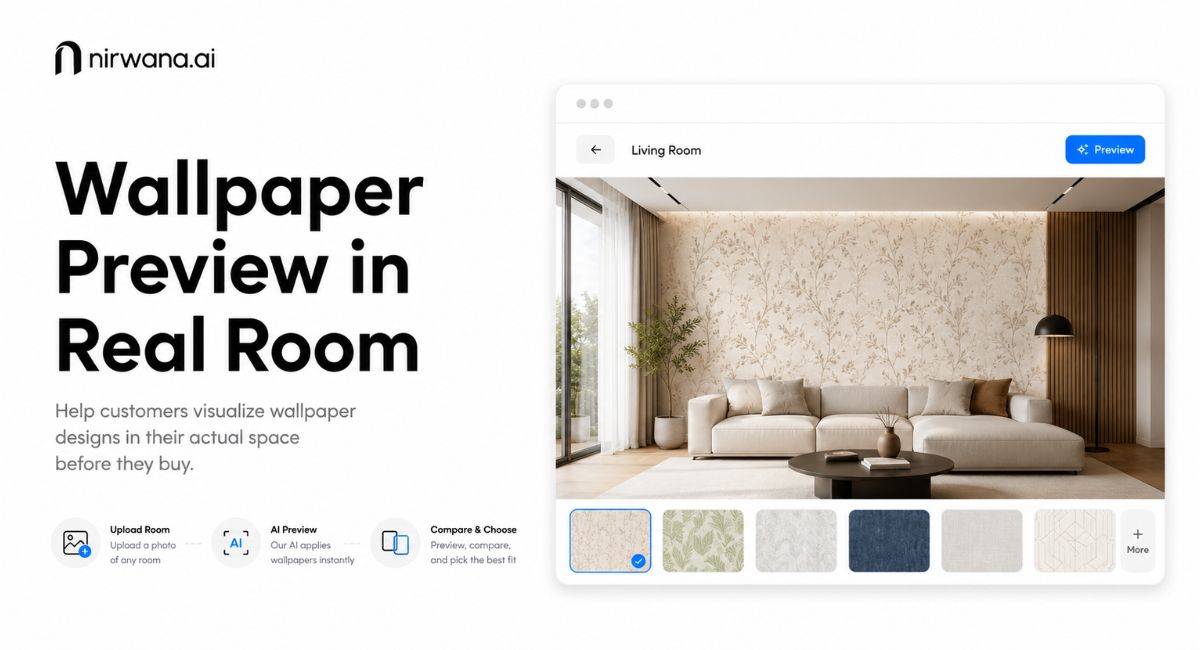
Choosing wallpaper should be exciting. You explore beautiful patterns, compare colors, and imagine how a design could transform your home. But the excitement often turns into uncertainty when one important question comes to mind: “Will this wallpaper actually look good in my room?”
A pattern that looks elegant in a catalogue may feel too busy on a large wall. A soft color shown on a website may look completely different under your room’s lighting. Even the size of the pattern can affect the final appearance.
This is where a wallpaper preview in real room becomes useful. Instead of relying on imagination, customers can upload a photo of their space and see how a selected wallpaper will look on their actual wall before purchasing it.
The result is a simpler, more confident, and more enjoyable wallpaper-buying experience.
Why Choosing Wallpaper Is More Difficult Than It Looks
Wallpaper is one of the fastest ways to change the personality of a room. It can create a luxurious bedroom, a playful children’s area, a professional office, or a striking feature wall.
However, wallpaper is also a highly visual product. Customers cannot make the right decision based only on a small sample or product thumbnail.
They need to understand:
- How large the pattern will appear on the wall
- Whether the colors match their furniture and flooring
- How the design looks under natural and artificial lighting
- Whether the wallpaper suits the size of the room
- How the pattern will repeat across the complete surface
Traditional catalogues cannot answer all these questions. Even physical samples show only a small section of the design. They do not provide a complete view of the finished room.
A wallpaper preview in real room solves this problem by helping customers evaluate the wallpaper within the correct environment.
What Is a Wallpaper Preview in Real Room?
A wallpaper preview tool allows users to apply a digital wallpaper design to a photograph of an actual room.
The customer takes or uploads a picture of a bedroom, living room, office, dining area, hotel room, or commercial space. The visualization system identifies the wall and places the selected wallpaper design onto it.
Unlike a basic image overlay, an advanced visualizer considers the wall’s shape, perspective, furniture placement, lighting, and surrounding interior elements. This creates a more realistic result.
For example, a customer planning a bedroom renovation can upload a photo of the wall behind the bed. They can then compare a floral design, a textured neutral wallpaper, and a geometric pattern without physically installing any of them.
This makes product comparison faster and reduces the risk of choosing the wrong design.
How Real-Room Visualization Changes Buying Behaviour
Today’s customers expect more than static product images. They want to interact with products and understand how those products will fit into their personal spaces.
Customers Become More Confident
Uncertainty is one of the biggest reasons customers delay a wallpaper purchase. They may like a design but worry that it will look different after installation.
By using a wallpaper preview in real room, customers can see a realistic representation before placing an order. This visual confirmation makes the decision feel safer.
Product Comparison Becomes Easier
Without visualization, customers may open several product pages, save screenshots, and mentally compare designs. This process is tiring and often confusing.
A visualizer allows them to switch between multiple wallpapers inside the same room image. They can instantly identify which color, texture, and pattern works best.
The Buying Journey Becomes More Personal
Standard room images are useful for inspiration, but they do not represent every customer’s home. A wallpaper that looks perfect in a professionally designed studio may not suit a customer’s existing furniture or lighting.
Real-room visualization connects the product directly to the customer’s space, making the buying experience more relevant and personal.
Key Benefits for Wallpaper Brands and Retailers
A wallpaper visualizer is not only helpful for customers. It also provides practical advantages for manufacturers, retailers, interior designers, and showroom teams.
Fewer Purchase Mistakes
Customers sometimes choose wallpaper based on a small image without understanding the complete pattern. After installation, they may feel that the design is too large, too dark, or unsuitable for the room.
A realistic preview sets clearer expectations and helps reduce product-selection mistakes.
Faster Sales Conversations
In a showroom, sales representatives often spend time explaining how a wallpaper might look on a complete wall. With a wallpaper preview in real room, they can show the customer instead of asking them to imagine it.
This makes the conversation clearer and helps customers shortlist products more quickly.
Better Online Engagement
Wallpaper websites often receive visitors who browse several designs but leave without taking action. Visualization gives them an interactive reason to stay, test products, and explore more of the catalogue.
When customers see their own room changing in real time, the website becomes more than a product catalogue. It becomes a decision-making tool.
Higher Confidence in Premium Products
Premium wallpapers usually involve a larger investment in material and installation. Customers naturally take more time before making a decision.
A realistic preview helps justify that investment by showing how the product could transform the finished space.
Why Pattern Scale and Alignment Matter
Wallpaper visualization is not simply about placing an image on a wall. The product must appear at the correct scale.
Suppose a wallpaper contains large tropical leaves. If the design is displayed too small, the preview will create a false expectation. Similarly, if a small geometric pattern is enlarged too much, it may look completely different from the installed result.
Pattern repetition and alignment are equally important. Wallpaper designs usually repeat horizontally and vertically across the wall. The visualizer should display these repeats naturally rather than stretching one image across the entire surface.
Nirwana.ai helps wallpaper brands create more realistic visual experiences through accurate surface detection, pattern placement, scale control, and automated texture mapping. The objective is to preserve the original wallpaper design while presenting it naturally within the customer’s room.
Practical Examples of Real-Room Wallpaper Visualization
Consider a customer who wants to create a feature wall in a living room. The room already has a grey sofa, wooden flooring, and warm lighting. The customer is comparing a dark botanical wallpaper with a beige textured design.
Using a wallpaper preview in real room, the customer may discover that the dark design makes the space feel smaller, while the beige option complements the furniture and keeps the room visually open.
In another example, an interior designer is selecting wallpaper for a boutique hotel. Instead of sharing multiple catalogue images with the hotel owner, the designer can apply shortlisted products to photographs of the actual guest rooms. This makes approvals faster and reduces communication gaps.
Wallpaper retailers can also use the technology inside a showroom. A customer can scan a QR code, upload a room photo from their phone, and visualize different products while speaking with the sales team.
How Wallpaper Brands Can Use Visualization Across Sales Channels
A wallpaper visualizer can support several parts of the customer journey.
Brands can integrate it into their website so online visitors can preview products immediately. Showrooms can use it on tablets, kiosks, or touchscreen displays. Sales teams can use it during consultations, while interior designers can use visual previews during client presentations.
The same experience can also support dealers and distributors. Instead of carrying large numbers of physical display boards, they can present a wider digital catalogue and apply designs to customer room images.
With Nirwana.ai, wallpaper businesses can connect their product catalogue to a visual experience that helps customers move from browsing to confident decision-making.
What Customers Should Check Before Finalising a Wallpaper
Although visualization simplifies the process, customers should still evaluate a few practical details before purchasing.
They should check the room’s lighting at different times of the day, compare the wallpaper with existing furniture, and confirm the actual product dimensions. It is also helpful to test both bold and neutral options, as the design that first catches attention may not always be the best long-term choice.
A wallpaper preview in real room should guide the selection process, while a physical sample can be used for final confirmation of texture, finish, and exact color.
Conclusion
Wallpaper can completely transform a space, but customers should not have to depend on imagination when making their choice. Real-room visualization helps them understand pattern scale, color coordination, design impact, and overall room appearance before installation.
For wallpaper brands and retailers, it creates a more interactive buying journey, supports faster sales decisions, and gives customers greater confidence.
By offering a wallpaper preview in real room, businesses can make wallpaper selection easier, more personal, and more reliable. It is a practical step toward helping every customer choose a design they will enjoy for years to come.

 Savi Kumari
 Thatware LLP