Nirwana AI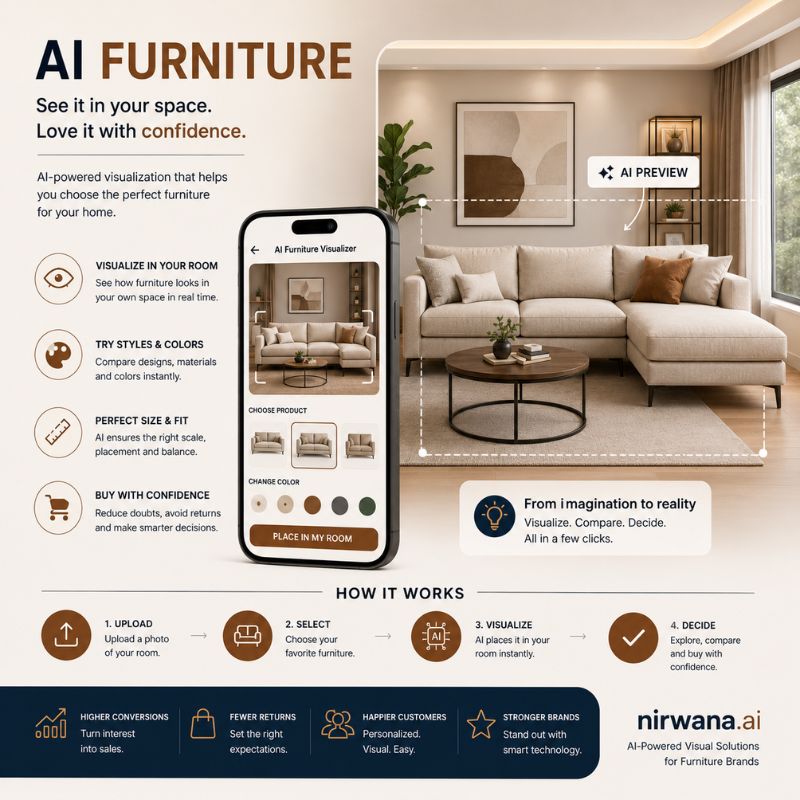
AI Furniture: The Future of Furniture Shopping Is More Visual, Personal, and Confident
Buying furniture has always been exciting, but it also comes with one big challenge: imagination. A sofa may look beautiful in a showroom, a dining table may look perfect in a catalog, and a bed may look premium on a website, but customers still wonder, “Will this actually look good in my home?”
That gap between seeing a product and imagining it in a real space is where many buying decisions get delayed or lost. Today, ai furniture technology is changing that experience completely. Instead of relying only on product photos, customers can now visualize furniture inside their own rooms, try different styles, compare options, and make faster, more confident decisions.
For furniture brands, this is not just a design upgrade. It is a smarter way to sell.
What Is AI Furniture?
AI furniture refers to the use of artificial intelligence in furniture design, visualization, personalization, and shopping experiences. It helps customers see how furniture will look in a real space before they buy it.
For example, a customer can upload a photo of their living room and instantly preview how a new sofa, coffee table, recliner, or cabinet would look inside that space. The AI can adjust lighting, scale, placement, and room perspective to make the result feel realistic.
This helps both buyers and brands. Customers get clarity, while brands reduce hesitation and improve the buying journey.
Why AI Furniture Is Becoming Important
Furniture is not a low-involvement purchase. People think about size, color, material, layout, comfort, style, and budget before making a decision. Even after liking a product, many customers hesitate because they are unsure how it will fit into their home.
Customers Want to See Before They Buy
Modern buyers are more visual than ever. They do not want to guess. They want proof.
A customer buying a sectional sofa wants to know whether it will overpower the living room. Someone buying a wooden dining table wants to see if it matches the flooring and wall colors. A homeowner choosing a TV unit wants to understand how it will look with existing decor.
AI furniture tools solve this problem by giving customers a clear preview before purchase.
Brands Need Better Online Selling Experiences
Furniture brands are no longer competing only on product quality. They are competing on customer experience. If one brand offers a flat product image and another lets customers visualize the product in their own room, the second brand naturally creates more confidence.
This is where platforms like Nirwana.ai help furniture businesses create realistic product previews for websites, sales teams, and showroom experiences.
How AI Furniture Improves the Buying Journey
The biggest advantage of ai furniture is that it removes uncertainty. When customers can see a product in their own space, they feel more connected to it.
It Reduces Customer Hesitation
One of the most common reasons customers delay buying furniture is doubt. They ask themselves:
Will this match my room?
Is the size right?
Will the color look different at home?
Does this style fit my interior?
AI visualization answers these questions visually. Instead of imagining, the customer sees the result. This can shorten the decision-making process and help brands convert interest into action.
It Makes Online Shopping More Personal
Traditional e-commerce shows the same product image to every customer. AI furniture creates a personalized experience because each customer can see the product in their own room.
For example, the same accent chair may look different in a modern apartment, a luxury villa, or a compact studio. AI helps customers understand the product in their personal context, not just in a generic catalog setting.
It Supports Better Sales Conversations
Sales teams can also use ai furniture tools during consultations. Instead of explaining how a sofa or wardrobe might look, they can show it directly.
This is especially useful for premium furniture brands, custom furniture makers, and interior-focused retailers. A visual conversation is always stronger than a verbal explanation.
Real Examples of AI Furniture in Action
Imagine a customer shopping for a new sofa online. They like a beige L-shaped sofa but are unsure whether it will match their dark wooden flooring. With an ai furniture visualizer, they upload a room photo, place the sofa, and instantly see the final look.
Another example is a furniture showroom. A customer likes a bed design but wants to see it in walnut, oak, and black finishes. Instead of showing separate samples, the salesperson can generate visual options on the spot.
For a modular furniture brand, AI can help customers preview wardrobes, cabinets, beds, and storage units in different layouts. This makes customization easier to understand and more exciting to explore.
Benefits of AI Furniture for Brands
AI furniture is not just useful for customers. It can also create strong business benefits for furniture brands.
Higher Customer Confidence
When customers can see the furniture in their own room, they feel more confident about buying. Confidence is one of the biggest drivers of conversion, especially in high-value furniture purchases.
Better Engagement on Website
Interactive visualization keeps people engaged for longer. Instead of quickly browsing and leaving, users spend more time trying products, comparing designs, and exploring options.
This can improve website experience and create more qualified leads.
Fewer Returns and Wrong Purchases
Many furniture returns happen because the product does not look or fit as expected. AI previews help customers make better choices from the beginning, reducing mismatch and disappointment.
Stronger Brand Positioning
Brands using ai furniture technology appear more modern, premium, and customer-focused. It shows that the brand is investing in a better buying experience, not just selling products.
Nirwana.ai, for example, helps furniture and interior product brands create visual experiences that can be used across websites, showrooms, and sales presentations.
The Future of AI Furniture
The future of furniture shopping will be more interactive and intelligent. Customers will expect to see furniture in their real spaces, compare multiple products, change colors, test layouts, and receive design suggestions instantly.
AI will also help brands create faster product mockups, personalized room scenes, digital catalogs, and sales-ready visuals. Instead of relying only on expensive photoshoots or static renders, brands will be able to create high-quality visual content more efficiently.
As this technology improves, ai furniture will become a standard part of the customer journey, especially for brands that sell online or deal with premium products.
Final Thoughts
AI furniture is changing the way customers discover, compare, and buy furniture. It makes the shopping experience clearer, more personal, and more confident. For customers, it removes guesswork. For brands, it creates better engagement, stronger sales conversations, and a more modern buying journey.
Furniture is emotional, visual, and personal. When people can see how a product fits into their own space, they are far more likely to move forward.
If your furniture brand wants to create a smarter and more visual customer experience, exploring tools like Nirwana.ai can be a strong step toward the future of furniture selling.


 Varshini varshh
 Customers Help Online