james godfrey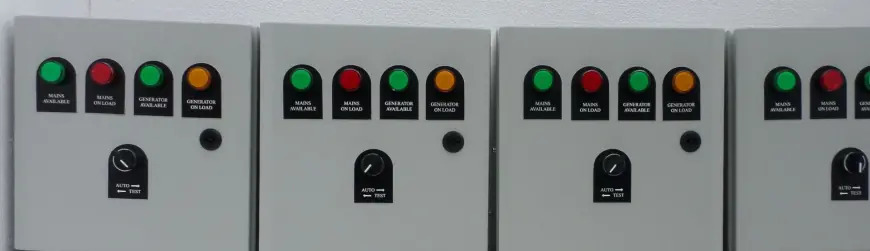
In the high-stakes world of UK data centres, the gap between a seamless transition and a catastrophic hardware reboot is often measured in the blink of an eye. When you’re mapping out a resilient power architecture, the real brain of the operation is the Automatic Transfer Switch. However, as server densities climb and hardware gets fussier about voltage dips, a standard mechanical switch might not always cut it.
In the UK, for facility management and IT management teams, the decision always comes down to one of two options: the mechanical ATS (Automatic Transfer Switch), and the solid-state STS (Static Transfer Switch). Choosing the right switch can mean the difference between five nines reliability and an expensive afternoon of diagnosing problems.
The Mechanical Workhorse: What is an ATS?
The traditional ATS is a rugged, electromechanical beast. It works by physically shifting a set of metal contacts from your primary power source (the grid) over to your secondary source (the generator). Think of it as a heavy-duty, automated version of the old-school changeover levers found in industrial basements.
Most UK server rooms set these up in a break-before-make configuration. This essentially means it pulls the plug on the mains before it connects to the standby supply. It’s a vital safety move to stop back-feeding the street, something that would not only fry your equipment but could be potentially fatal for a utility engineer working on the local substation.
Since it is a physical motion that uses springs, solenoids, and hefty copper busbars, there is definitely a delay. The good-quality mechanical switch takes 15 to 30 milliseconds to make the jump. When you have fans, pumps, and lights being used, the brief flash is totally irrelevant. But in terms of server power supply units, 30 milliseconds is like forever. If this delay is more than the holding capacity of the capacitors inside the server, your entire rack goes down, leading to a very complex and destructive restart procedure.
The High-Speed Alternative: The Static Transfer Switch (STS)
If the ATS is a heavy-duty shield, the STS is a surgical scalpel. It doesn’t have moving parts; instead, it uses power semiconductors, specifically Silicon Controlled Rectifiers (SCRs), to move the load. Because there’s no physical arm swinging back and forth, the transfer is almost instant.
Most STS switches between two power sources within a timeframe that is less than 4 to 6 milliseconds. This falls comfortably within the limits of the ITIC curve and thus does not affect sensitive dual-corded servers at all. In the case of Zone 1, where uptime is essential, like high-frequency stock exchange floors and medical imaging rooms, there is no other choice.
Comparing the Two: The Technical Breakdown
When you’re weighing these up for a UK site, you have to look past just the speed. You have to consider how they handle the ugly side of electricity.
1.Reliability vs. Sensitivity
The ATS is the king of reliability for bulk loads. If your server PSUs are robust and have a generous hold-up time (around 20ms or more), an ATS is a cost-effective, reliable anchor. However, if you are running modern, high-efficiency Titanium-rated power supplies, their hold-up is often shorter to save on energy. In that case, the microsecond precision of an STS is the only way to avoid a hardware hang-up.
2..Maintenance Realities
Those mechanical contacts in an ATS take a beating every time they move. Over time, you get carbon buildup or pitting from electrical arcing, which is that tiny spark you see when a high-voltage connection is made. In the UK’s damp climate, this can lead to oxidisation. You’ll need regular thermal imaging and contact resistance tests to make sure things aren’t running hot.
The STS has an amazing life span when there are no moving parts involved. However, semiconductors do not tolerate extreme temperatures and high voltages very well. If there is a problem with one part in the STS, it will be quite difficult to fix. On the other hand, if an ATS stops working, a technician can easily bypass the system.
3. Dealing with Faults and Surge
The UK grid is generally solid, but industrial sites can be noisy. A mechanical ATS is incredibly tough; it can handle the kind of electrical thumps and massive fault currents that might fry the sensitive circuitry inside an STS. If your facility is located near heavy industrial plants with big motors, the robust nature of an ATS provides a much-needed layer of physical isolation.
The Phase Sync Problem: Why UPS Choice Matters
One thing that often gets missed in UK installations is phase synchronisation. If your two power sources, say, the mains and your UPS, aren’t perfectly in sync when the switch happens, you can end up with a massive current surge. This out-of-phase transfer is like trying to shift a car into gear while the engine is revving at 5,000 RPM.
Most STS units come with Phase-Locked Loop logic. They essentially wait for the two sources to align perfectly before making the jump. A standard mechanical switch doesn’t have that finesse; it relies on the brief break period to let residual magnetism in your kit die down before it hits it with power from the new source. For high-density server racks with dozens of spinning fans, that torque spike from a bad phase sync can be a silent hardware killer.
Final Thoughts for UK Sites: The Hybrid Strategy
In a lot of sophisticated setups, the smartest move isn’t picking one. It’s using both. Many UK data centres use a big, rugged mechanical switch at the building’s entrance to manage the Emergency Power from their generators. Its job is to handle the raw, high-amperage bulk of the building’s load, including the HVAC and lighting.
Then, they use smaller, rack-mounted STS units to handle the sensitive last-mile delivery to the servers. This gives you the best of both worlds: the raw strength of the ATS to handle the grid, and the surgical speed of the STS to protect the silicon.
Just do not forget that the UK’s earthing regulations may play a significant role here, and choosing between TN-S and TN-C-S may cause trouble for you, especially when it comes to installing four-pole switching devices. You should be careful and think of not only the required speed of switching but also the preservation of the neutral conductor so that you would not keep triggering the RCD or annoying the local DNO inspector. The proper combination of technologies and tolerances of loads is the key.


 mahesh Chavan