AdsAgenz AdsAgenz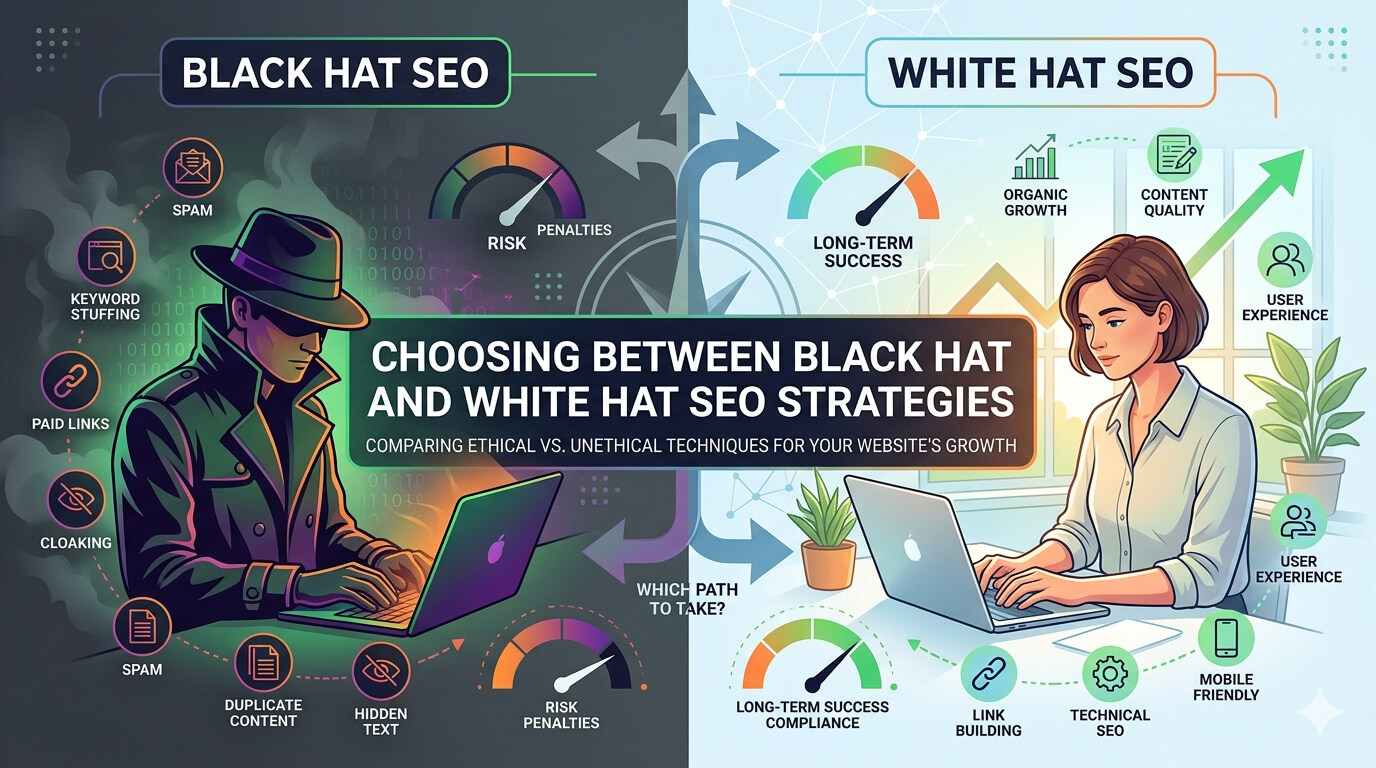
There’s always that moment, right? You’re staring at your analytics, wondering why traffic isn’t moving… or worse, why it dipped overnight. And somewhere in that spiral, you bump into the whole blackhat vs whitehat debate. Not in a clean, textbook way. More like random blog posts, Reddit threads, and someone claiming they ranked a site in 3 days (which… yeah, sounds suspicious).
I’ve been there. Clicking through case studies at 2 a.m., thinking—okay, what’s actually worth it?
Let’s talk it through. No fluff. Just what this really feels like when you’re trying to grow a site.
What is White Hat SEO?
White hat SEO is… well, the “play by the rules” approach. You follow search engine guidelines, focus on real users, and build things that (hopefully) last.
Core white hat SEO techniques
- Writing helpful, human content (not robotic filler)
- Proper keyword research (yeah, still matters)
- Internal linking that actually makes sense
- Earning backlinks naturally (slow, sometimes painfully slow)
- Improving page speed and mobile experience
You’re not trying to trick Google. You’re trying to make your site something people don’t bounce off in 3 seconds.
Why people choose white hat SEO
It’s stable. That’s the biggest thing.
I’ve seen sites hit by algorithm updates… and the ones doing clean SEO? They dip a little, then recover. The shady ones? Gone. Like they never existed.
Also, if you’re building a brand—like a real business, not a churn-and-burn affiliate thing—white hat just feels safer. You sleep better, honestly.
Still… it’s slow. That part frustrates a lot of people.
What is Black Hat SEO?
Now this is where things get… interesting.
Black hat SEO is about shortcuts. Not small ones. Big, aggressive, rule-breaking shortcuts designed to rank fast.
Common black hat SEO techniques
- Keyword stuffing (yeah, still happens)
- Cloaking (showing different content to users vs search engines)
- Buying backlinks in bulk
- Private Blog Networks (PBNs)
- Automated content generation at scale
Some of these sound outdated, but trust me—they’re still used. Just dressed up better.
Why people still use black hat SEO
Speed. That’s it.
You can launch a site and see traffic within weeks. Sometimes days. It feels like hacking the system.
I once tested a small niche site using some questionable backlinks… and yeah, it ranked. Fast. It also crashed just as fast a few months later. Lesson learned. Kind of.
Blackhat vs Whitehat: The Real Difference
This isn’t just “good vs bad.” It’s more like short-term gain vs long-term stability.
Risk vs reward
Black hat:
- High reward (at first)
- High risk (penalties, deindexing)
White hat:
- Slower growth
- Lower risk
- More predictable over time
And the risk isn’t theoretical. Google penalties are real. Manual actions… algorithm hits… they can wipe out months (or years) of work.
Time investment
White hat SEO feels like planting seeds. You water them, wait, second-guess yourself, check rankings way too often…
Black hat feels like flipping a switch. Traffic spikes. You feel like a genius. Until it stops.
Can You Mix Black Hat and White Hat SEO?
This is where people get sneaky.
Some call it “gray hat SEO.” A bit of both. Playing close to the edge but not jumping off it.
What gray hat SEO looks like
- Buying a few backlinks but keeping content legit
- Slightly over-optimizing keywords
- Using expired domains for link boosts
It’s tempting. Really tempting.
And honestly? A lot of sites ranking today are not 100% clean. That’s just reality.
Still, there’s always that tiny voice… “Is this going to backfire later?” Sometimes it does. Sometimes it doesn’t. Not the most comforting answer, I know.
Long-Term SEO Strategy: What Actually Works?
If you’re building something you care about—like a business, a personal brand, even a niche site you don’t want to babysit constantly—white hat tends to win.
Why white hat SEO holds up over time
- Google keeps rewarding quality (even if imperfectly)
- Content compounds (old posts can still bring traffic)
- Backlinks earned naturally tend to stick
There’s also this weird thing… trust.
When users trust your content, they stay longer, click more, come back. You can’t fake that with tricks.
The downside people don’t talk about
It can feel boring.
No sudden spikes. No “I cracked the algorithm” moments. Just steady work.
And yeah, sometimes you do everything right and still don’t rank. That part… frustrating.
Black Hat SEO Risks You Shouldn’t Ignore
People downplay this. Or they say, “Just start another site if it fails.” Which sounds fine until you’ve poured weeks into something.
Common risks
- Google penalties (manual or algorithmic)
- Deindexing (your site disappears completely)
- Lost revenue overnight
- Reputation damage (if you’re running a brand)
Also, recovery isn’t always possible. Some sites never bounce back.
I’ve seen people try to “clean up” a penalized site… disavow links, rewrite content… and still nothing. It’s like being stuck in digital limbo.
White Hat SEO Tips That Actually Help
Not the generic stuff. The real, slightly messy advice.
Focus on search intent, not just keywords
Yeah, keywords matter. But intent matters more.
If someone searches “black hat SEO techniques,” are they curious? Looking for a guide? Trying to use them? Your content should match that vibe.
Write like a person (not a content machine)
People can tell. Even if they don’t say it.
Short sentences. Random thoughts. A bit of personality. It keeps readers around.
Build links slowly (and naturally)
I know… easier said than done.
Guest posts, collaborations, genuinely useful content—it works. Just not overnight.
So… Which One Should You Choose?
Honestly, it depends on your goal.
If you’re experimenting, testing niches, or okay with losing sites—black hat might feel exciting.
If you’re building something real, something you don’t want to constantly fix or restart… white hat is the safer path.
Or maybe you land somewhere in between. A little cautious, a little curious.
That’s where most people end up, I think.


 yolo247club club
 Yolo247 club