Kirthi kumar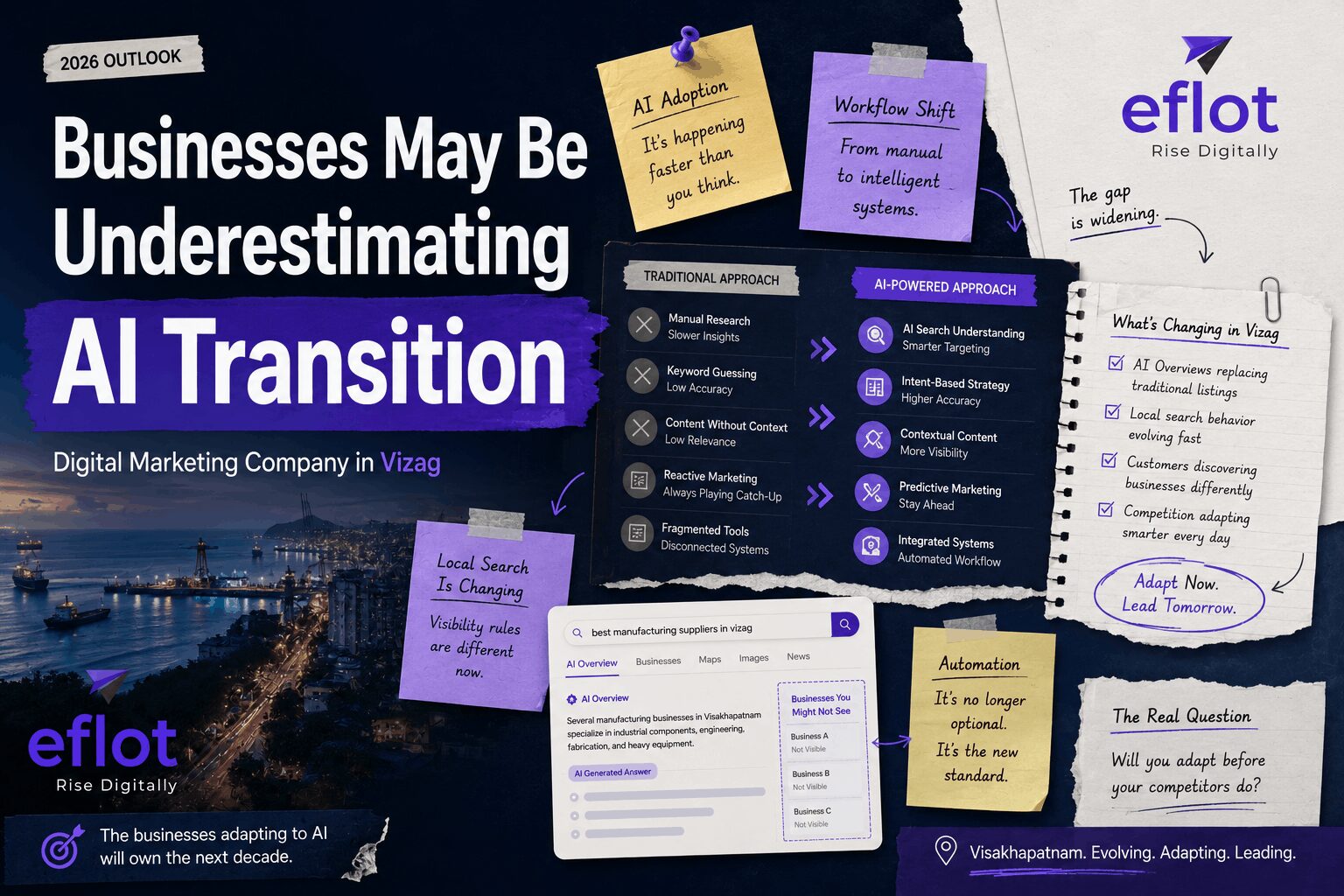
For years, Visakhapatnam was mostly discussed through three identities:
- port city
- industrial zone
- tourism destination
But over the last 12–18 months, something far more important has started happening quietly beneath the surface.
Vizag is beginning to attract attention as an emerging AI and digital infrastructure corridor.
Not just through startup conversations…
but through billion-dollar infrastructure moves, state-backed technology positioning, data-center expansion, cloud investment discussions, and growing interest from enterprise technology ecosystems.
And most local businesses still do not fully understand what this transition may change.
Because when a city starts evolving into a technology and digital infrastructure ecosystem, consumer behavior changes with it.
That is becoming one of the most important reasons businesses are increasingly approaching a digital marketing company in Vizag with a very different mindset than before.
Not simply:
“help us get traffic.”
But:
“help us remain relevant before the market changes too quickly.”
Why Vizag’s recent AI infrastructure push matters more than people think
One of the biggest developments this year was Google officially beginning work on its massive AI infrastructure project in Visakhapatnam.
The project, developed alongside AdaniConneX and Nxtra by Airtel, is being positioned as one of India’s most ambitious AI and digital infrastructure ecosystems so far.
And this is not just another real-estate announcement.
Large-scale AI infrastructure changes what kinds of businesses eventually emerge around a city.
Historically, when major technology ecosystems form around infrastructure:
- ancillary businesses follow
- startup ecosystems expand
- digital hiring increases
- SaaS and service industries grow
- demand for visibility accelerates
We saw variations of this earlier in:
- Bangalore
- Hyderabad
- Pune
Now Andhra Pradesh is trying to position Vizag similarly through long-term digital infrastructure investments.
Why businesses may be misreading what “AI growth” actually means
One mistake many people make is assuming data centers directly create huge employment.
Even local community discussions around Vizag’s AI expansion reflect skepticism about this. Some users openly pointed out that data centers themselves may create relatively limited direct employment after construction phases stabilize.
But that misses the larger economic effect.
Infrastructure rarely changes cities only through direct jobs.
It changes them through ecosystem behavior.
Once a city becomes associated with:
- AI infrastructure
- cloud ecosystems
- enterprise technology
- startup positioning
- digital investment
the surrounding business environment starts modernizing faster too.
And businesses that continue operating with outdated digital visibility systems usually become easier to ignore over time.
This is exactly why many companies are now consulting a digital marketing company in Vizag earlier instead of waiting until competition becomes overcrowded.
Why Vizag’s digital ecosystem is evolving faster in 2026
Several developments now point toward Vizag entering a much more aggressive technology transition phase.
Recent reports show:
- Andhra Pradesh actively inviting Capgemini to establish development centers in Vizag with potential large-scale employment impact
- AP Digital Technology Summit 2026 attracting delegates focused on AI, cloud systems, cybersecurity, startups, and digital infrastructure
- growing positioning of Vizag as a future IT and data-center hub within Andhra Pradesh’s broader investment strategy
This matters because digital competition usually intensifies rapidly once ecosystems begin scaling.
Especially for:
- local businesses
- educational institutions
- healthcare brands
- real-estate firms
- logistics companies
- hospitality businesses
that suddenly find themselves competing inside a much more digitally aware environment.
Why discoverability is becoming a serious problem now
One of the least-discussed business risks in emerging tech cities is discoverability collapse.
When digital competition remains low, even mediocre visibility performs reasonably.
But once ecosystem density increases:
- more businesses advertise
- more startups produce content
- more brands optimize visibility
- audience expectations rise quickly
Suddenly businesses that looked “visible enough” earlier start disappearing inside digital noise.
This becomes especially dangerous because users now research businesses much more aggressively before engagement.
They compare:
- reviews
- authority
- responsiveness
- consistency
- digital credibility
- expertise visibility
before making decisions.
Which means discoverability is no longer just about ranking.
It is increasingly about perceived trust.
A strong digital marketing company in Vizag now needs to focus not only on visibility generation, but also on helping businesses build authority before ecosystem saturation intensifies.
Why younger Vizag consumers are behaving differently online
Another important shift happening quietly is behavioral change among younger digital users in Vizag.
The city’s growing exposure to:
- startup culture
- AI conversations
- creator ecosystems
- remote work
- tech hiring
is influencing how younger audiences evaluate businesses.
They increasingly expect:
- faster communication
- modern branding
- digital responsiveness
- educational content
- transparent positioning
Businesses that still communicate online like it is 2018 increasingly feel outdated psychologically.
Even if their actual service quality remains strong.
This gap between operational quality and digital perception is becoming commercially important.
Why “trust visibility” matters more than aggressive advertising now
One of the biggest internet shifts in 2026 is skepticism toward over-optimized marketing.
Users increasingly recognize:
- artificial urgency
- generic SEO content
- AI-generated engagement bait
- fake authenticity patterns
very quickly.
Which means businesses depending only on aggressive visibility tactics are struggling to create memorability.
This is why many stronger brands are now investing more carefully into:
- expertise-driven visibility
- educational ecosystems
- long-term email marketing retention
- authority-building systems
instead of relying entirely on temporary campaign spikes.
Because internet users increasingly remember businesses that feel useful…
not merely loud.
Why local business ecosystems may change faster than expected
Another important factor is regional economic momentum.
Visakhapatnam Port recently crossed major cargo-handling milestones and is targeting further expansion within the next two years.
Meanwhile SME-focused events and investment discussions around Vizag are increasing steadily.
This indicates broader commercial acceleration around:
- logistics
- manufacturing
- trade
- infrastructure
- technology services
And whenever economic ecosystems scale, digital competition usually follows rapidly afterward.
Businesses that establish authority early often gain disproportionate visibility advantages later.
That is also why the role of a digital marketing company in Vizag is changing from simple campaign execution toward long-term discoverability and trust positioning.
Why startup conversations in Vizag reveal a deeper issue
Interestingly, community discussions in Vizag still repeatedly mention one challenge:
ecosystem maturity.
Recent conversations around startups in Vizag highlighted concerns around:
- weaker founder networks
- limited startup exposure
- ecosystem fragmentation
- lack of awareness around emerging businesses
But that also creates opportunity.
Because cities in transition phases often reward early digital positioning heavily.
The businesses building visibility, trust, and authority before ecosystem saturation usually benefit most later.
What smarter businesses are already preparing for
The businesses adapting early are increasingly focusing on:
- digital credibility
- discoverability systems
- authority positioning
- audience familiarity
- trust-oriented local seo visibility
- stronger communication consistency
- sustainable ppc service strategy
because they understand something important:
when a city transforms digitally, customer expectations transform too.
And businesses that delay adaptation often become invisible gradually rather than suddenly.
How Eflot approaches growth in changing digital ecosystems
Eflot focuses on helping businesses strengthen long-term digital visibility in rapidly evolving markets.
The approach generally emphasizes:
- authority-focused positioning
- sustainable discoverability
- audience trust systems
- communication clarity
- balanced growth strategy
That often helps businesses remain competitive even as digital ecosystems become more crowded and behavior-driven.
FAQ
Why is Vizag becoming important digitally?
Large-scale AI and digital infrastructure investments are accelerating technology growth around the city.
How does AI infrastructure affect local businesses?
It changes ecosystem behavior, competition levels, and customer expectations gradually.
Why are businesses struggling with discoverability now?
Digital competition and user research behavior are becoming more aggressive.
Why is trust becoming more important online?
Users increasingly filter out over-optimized and repetitive marketing patterns.
Why should businesses adapt early?
Cities undergoing digital transformation often reward early visibility and authority-building significantly.
Key Takeaways
- Vizag is entering a major digital and AI infrastructure transition phase
- AI ecosystem investments may accelerate broader business modernization around the city
- Digital competition and customer expectations are increasing rapidly
- Trust visibility now matters more than simple reach generation
- A stronger digital marketing company in Vizag increasingly needs to focus on authority, discoverability, and long-term digital positioning instead of only campaign visibility


 Linda Anne
 onion links