Fleetable tech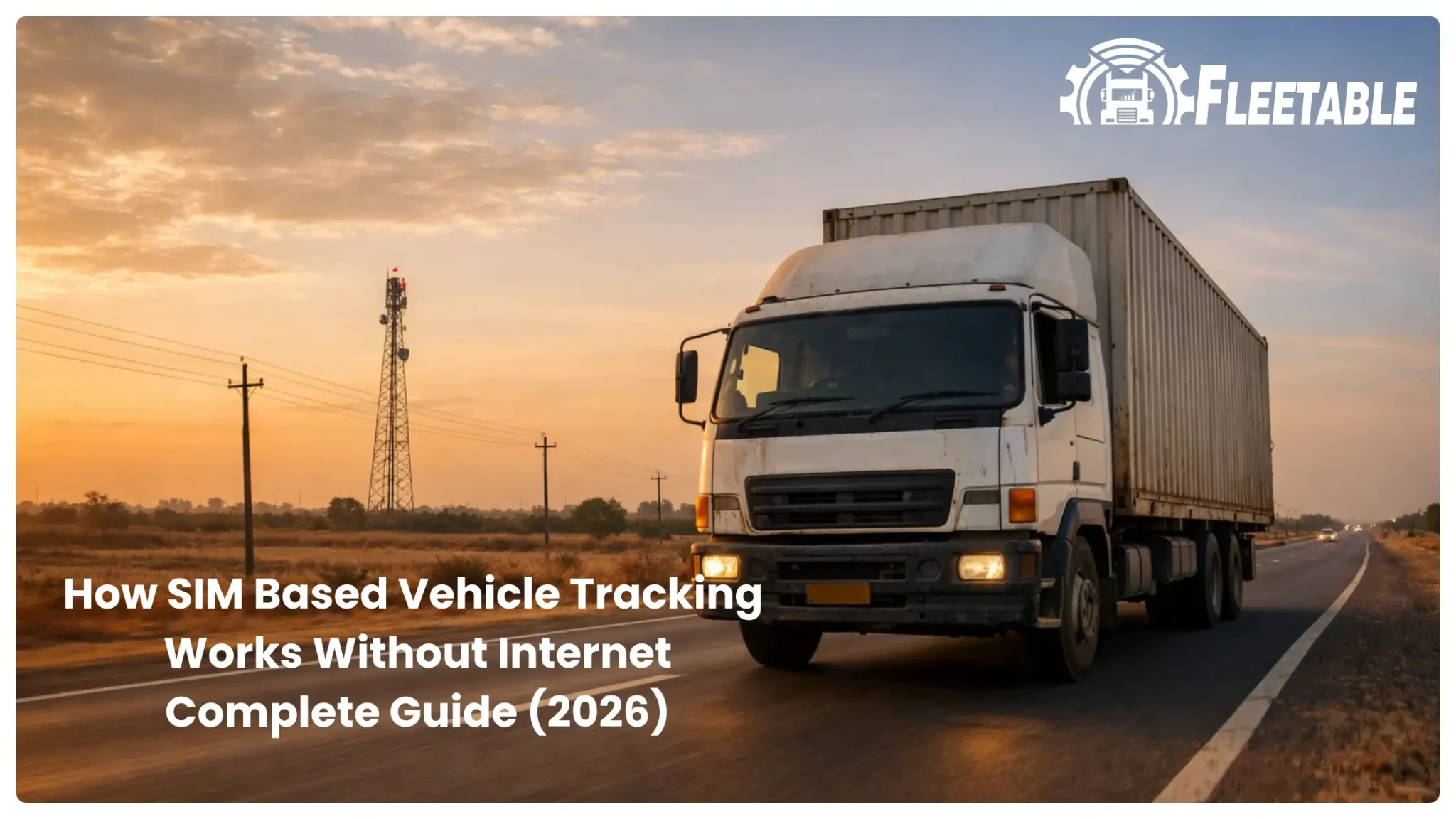
We have all seen those live tracking maps — a vehicle dot moving smoothly across the screen, updating every few seconds. It looks seamless, almost effortless. But behind that moving dot is an internet connection, and the moment that connection drops, most traditional tracking systems go completely blind.
For businesses managing fleets across India’s vast road network, this is not a hypothetical problem. It happens every single day — on mountain highways, in remote agricultural belts, across districts where 4G simply does not reach. And that is exactly where sim based tracking changes the game.
So What Makes It Different?
A SIM-based tracking device does not wait for an internet connection to do its job. It works at a more fundamental layer of the cellular network — the same layer that carries voice calls and text messages. Even when mobile data is nowhere to be found, that layer is almost always active.
The GPS module inside the device picks up satellite signals completely independently of the internet. It knows where the vehicle is. The question is only how to send that information — and this is where the system gets clever.
When mobile data is unavailable, the device automatically switches to SMS. It packages the vehicle’s coordinates, speed, direction, and timestamp into a structured text message and fires it to a server through the cellular messaging channel. No data plan needed. No internet required. Just a basic cellular signal, which exists in far more places across India than broadband ever will.
Some advanced systems also use USSD — a signaling channel built into every mobile network — to exchange location information instantly. If you have ever dialed *99# to check your bank balance without internet, you already understand how USSD works. It is fast, lightweight, and completely independent of data connectivity.
Read full Blog:- https://blog.fleetable.tech/how-sim-based-vehicle-tracking-works-without-internet-complete-guide-2026/


 Crack Chip Repair
 Pratham Yoga