Olive Mine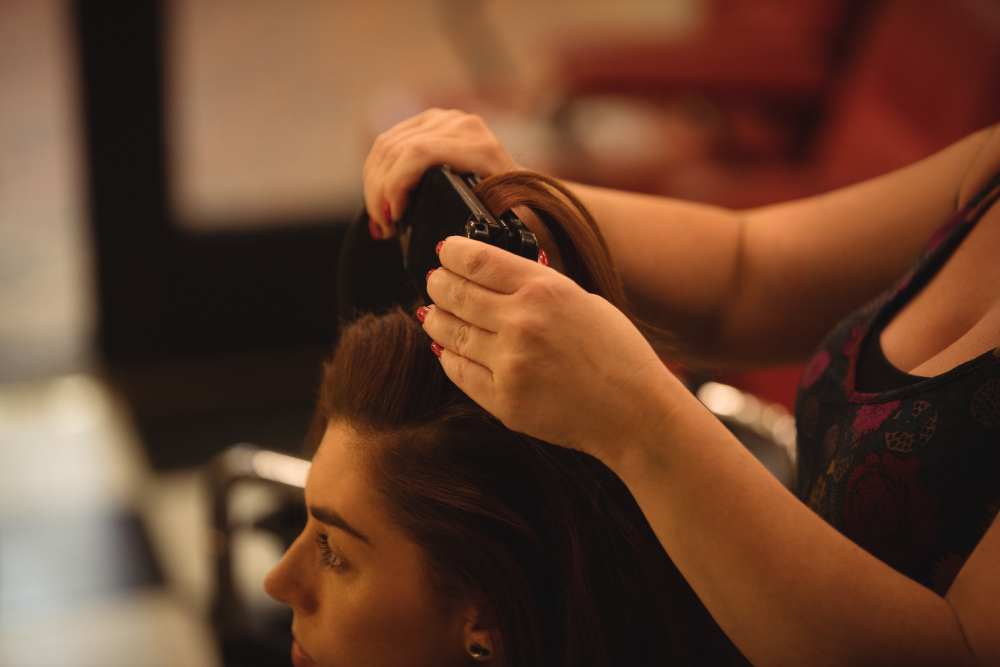
Someone sits down in a chair in Midtown, halfway through explaining what they want, and the stylist already has both hands in their hair — not cutting yet, just feeling the density, the fall direction, the way the sections naturally want to part. No rushing. No upselling a treatment before the consultation’s done. Just careful, practiced attention. It’s a different pace than most of the city operates at, and it’s a big part of why clients who discover Japanese hair salons tend to stick with them long after the novelty wears off.
The demand for the best Japanese hair salon in New York has grown steadily among clients who’ve cycled through enough trendy spots to know the difference between a good result and a genuinely considered one. This isn’t about cultural novelty. It’s about a specific tradition of technical training that produces measurably different outcomes — especially for people with difficult hair, complex face shapes, or the very specific frustration of having a haircut that looks great in the salon and falls apart by day three.
What Japanese Cutting Methodology Actually Involves
The foundation of Japanese haircutting training — in Tokyo academies and increasingly in New York shops staffed by their graduates — is precision sectionwork. Every cut begins with a geometric plan. Section lines, cut angle relative to the scalp, weight distribution across the head — none of it improvised. All of it calculated.
This comes partly from Sassoon-derived cutting theory, which Japanese stylists adopted and refined, and partly from a training culture that prioritizes repetition over creative expression in the early years. Junior stylists spend years on fundamentals before making independent decisions.
The result shows in how a cut behaves over time. Intentional weight distribution means predictable growth — the shape holds in week three rather than collapsing. That’s not luck. That’s geometry.
Why It Works Particularly Well on Fine or Straight Hair
Japanese cutting technique has a specific reputation with fine and straight hair, and that reputation is earned. When hair has natural texture or wave, small inconsistencies in a cut get absorbed — the movement disguises a slightly uneven line. Fine, straight hair doesn’t offer that cover. Every angle shows. Every graduation is visible.
Stylists trained in high-precision Japanese methodology cut fine and straight hair with the kind of exactness the texture demands. Blunt cuts land perfectly level. Layers fall exactly where they’re intended. The difference between a blunt bob cut with casual technique and one cut with Japanese-school precision is immediately visible — and stays visible through every wash.
This is partly why clients who’ve never thought much about where their stylist trained start caring once they’ve seen what careful technical work actually produces.
The Consultation Culture Is Its Own Thing
Walk into a well-run Japanese hair salon in Manhattan and the intake process is noticeably different from the standard New York salon experience. The consultation takes time. Questions come in a specific order — hair history before style goals, lifestyle considerations before reference photos. The stylist is building a picture of what the hair actually does before deciding what to do with it.
Reference photos are conversation starters, not blueprints. A good Japanese-trained stylist looks at a photo and translates — “your texture will behave differently, so the result will look like this instead.” That honesty is rare. It also prevents the most common source of post-salon disappointment.
How to Tell a Serious Shop from a Themed One
Not every salon with Japanese branding in New York reflects genuine Japanese training culture. Some trade on the aesthetic — minimalist interiors, Japanese product lines, soft lighting — without the technical substance underneath. The tell is usually in the consultation. A stylist who moves quickly from greeting to scissors, who doesn’t ask about texture history or maintenance habits, isn’t operating from the methodology being discussed here regardless of the shop’s branding.
Asking directly about where a stylist trained is not rude. It’s how clients who care about results make decisions. Any top hair salon in New York with real Japanese training credentials will answer that question without hesitation — and probably with some detail.
The Quiet Reason for the Loyal Following
Japanese hair salons in New York don’t tend to build followings through aggressive marketing. The clientele grows because the work speaks — a cut that still looks right six weeks later, a color treatment that didn’t fry the ends, a blowout that didn’t require re-doing at home before the client’s dinner reservation.
That kind of consistency is difficult to fake and impossible to manufacture with branding alone. It’s the whole reason clients keep coming back, keep referring people, and stop bothering to look for somewhere new.


 Car Windscreen Wipers