Nirwana AI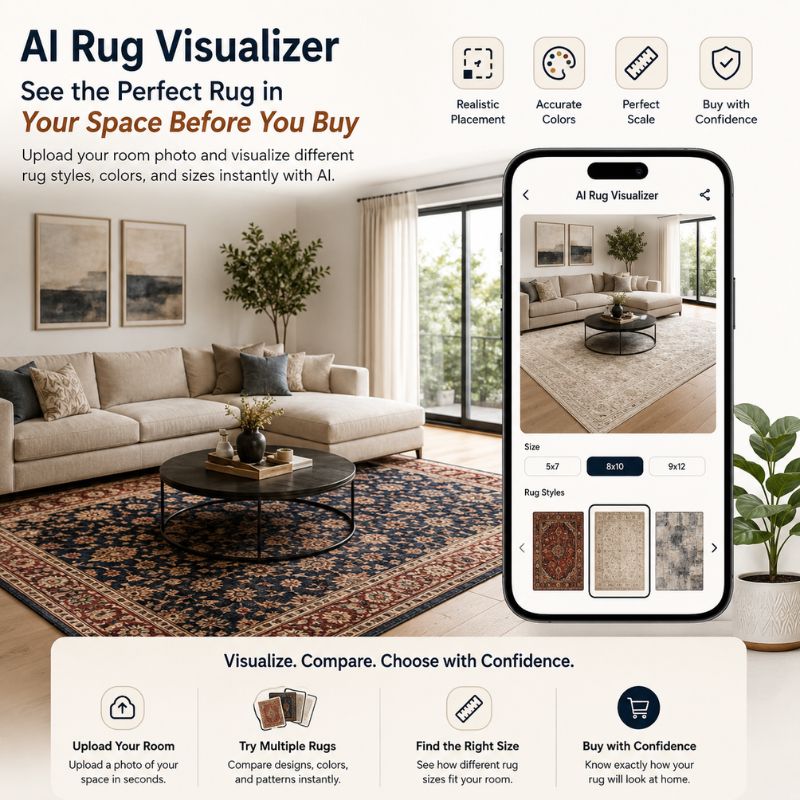
Choosing a rug sounds simple until a customer actually starts doing it. The size feels confusing, the color may look different at home, and the pattern that looks beautiful in a catalog may feel too loud once placed in a real living room. This is where an ai rug visualizer is changing the way people shop for rugs online and in showrooms.
Instead of guessing how a rug will look, customers can preview it directly in their own space. They can see the color, scale, placement, and overall room feel before making a purchase. For rug brands, interior retailers, and home décor businesses, this creates a smoother buying journey, fewer doubts, and a more confident customer.
What Is an AI Rug Visualizer?
An ai rug visualizer is a digital tool that allows users to upload a room photo and place different rug designs inside that space using artificial intelligence. The tool understands the room layout, floor area, perspective, lighting, and rug placement so the preview looks realistic.
For example, a customer shopping for a Persian rug can upload a photo of their living room and instantly see how that rug looks under the coffee table. Another customer looking for a modern neutral rug can compare multiple options before deciding which one matches their sofa, wall color, and flooring.
This experience is much more useful than viewing a flat product image on a white background. It brings the product into the customer’s actual environment.
Why Rug Shopping Needs Better Visualization
Rugs are highly visual products. A small change in size, color, texture, or pattern can completely change the mood of a room. But traditional online shopping does not solve the biggest problem: customers cannot imagine the final look clearly.
Size Confusion
Many customers struggle to choose the right rug size. A 5×7 rug may look perfect in a product image but too small in a large living room. An 8×10 rug may look premium but might overwhelm a compact bedroom. With an ai rug visualizer, customers can understand scale before buying.
Color and Pattern Doubt
Rugs often have detailed patterns and multiple shades. A rug that looks beige online may look warmer or cooler depending on the room lighting. Visualization helps customers see how the rug blends with existing furniture, flooring, curtains, and wall colors.
Lack of Confidence
When customers are unsure, they delay the purchase or abandon the cart. This is especially common for premium rugs, handmade rugs, and large area rugs where the investment is higher. A realistic preview reduces hesitation and makes the decision easier.
How an AI Rug Visualizer Improves the Buying Journey
An ai rug visualizer makes the shopping process more interactive and practical. It gives customers control over the experience instead of forcing them to imagine everything on their own.
Customers Can Preview Before Buying
The biggest advantage is simple: customers can see the rug in their own room before making a decision. This builds trust because they are no longer buying blindly.
For example, a homeowner redesigning a living room can try a bold geometric rug, a soft wool rug, and a classic vintage rug in the same room photo. Within minutes, they can compare which option feels more balanced.
It Helps Sell Premium Rugs Better
Premium rugs often need more explanation. Customers want to understand craftsmanship, texture, and how the rug will elevate the room. A visualizer helps the brand show the lifestyle value of the product, not just the product itself.
When a customer sees a luxury rug completing their space, the price feels easier to justify.
It Reduces Returns and Replacements
Returns are painful for rug businesses because rugs are bulky, costly to ship, and often difficult to repack. Many returns happen because the customer expected a different look, size, or color match. By using an ai rug visualizer, brands can reduce mismatch expectations before the purchase happens.
Benefits for Rug Brands and Home Décor Retailers
For businesses, visualization is not just a nice website feature. It can directly impact conversion, customer engagement, and sales team performance.
Higher Website Engagement
When customers can interact with products, they spend more time exploring. Instead of scrolling through product listings quickly, they upload a room image, try different rugs, compare styles, and shortlist options. This increases product discovery and keeps users engaged longer.
Better Lead Quality
If a customer has already visualized a rug in their room, they are much closer to making a buying decision. For sales teams, this means conversations become more focused. Instead of explaining everything from scratch, they can discuss the customer’s selected design, size, and room requirement.
Stronger Showroom Experience
An ai rug visualizer is also useful inside physical stores. A sales executive can help visitors visualize rugs in their actual rooms instead of asking them to imagine from samples or catalog images. This is especially helpful for customers who are confused between multiple options.
Practical Example: A Customer Choosing a Living Room Rug
Imagine a customer has a beige sofa, wooden flooring, and a black center table. They like three rug options: a traditional red rug, a cream textured rug, and a modern abstract rug.
Without visualization, they may keep switching between choices and leave without buying. But with a visualizer, they can upload their room photo and compare all three options instantly. The red rug may feel too heavy, the cream rug may blend beautifully, and the abstract rug may add a premium modern look.
This simple preview can turn confusion into a clear decision.
How Nirwana.ai Helps Rug Brands Create Better Visual Experiences
Nirwana.ai helps home improvement and décor brands offer realistic product visualization experiences for their customers. For rug brands, this means allowing buyers to preview rugs in real rooms with better scale, perspective, and visual accuracy.
The goal is not just to show a rug on the floor. The goal is to make the customer feel confident that the rug belongs in their space. With tools like automated placement, realistic previews, and room-based visualization, Nirwana.ai helps brands create a more modern and conversion-focused buying journey.
What Makes a Good AI Rug Visualizer?
Not every visualizer creates a useful experience. A good ai rug visualizer should feel natural, simple, and realistic.
Realistic Scale and Placement
The rug should not look pasted onto the floor. It should match the room’s perspective and appear properly placed under furniture or in open floor areas.
Accurate Colors and Textures
Customers need to trust what they see. The visualizer should preserve the rug’s design, color tone, texture, and pattern as accurately as possible.
Easy User Experience
The tool should be simple enough for any customer to use. Upload a room photo, choose a rug, preview it, and compare options. The process should feel quick and effortless.
Why AI Visualization Is Becoming Important for Rug Sales
Home décor shopping is becoming more visual and experience-driven. Customers do not just want product details; they want confidence. They want to know how the product will look in their own home before spending money.
This is why an ai rug visualizer is becoming a powerful tool for online rug stores, luxury rug brands, interior retailers, and showroom-based businesses. It bridges the gap between product browsing and real-life decision-making.
For brands, it can improve customer trust, reduce back-and-forth conversations, support sales teams, and create a more premium buying experience.
Conclusion
Rugs can transform a room, but customers need confidence before choosing the right one. An ai rug visualizer makes that decision easier by showing the rug inside the customer’s actual space. It helps them compare styles, understand size, reduce doubts, and move faster toward purchase.
For rug brands and home décor businesses, this is a smart way to improve engagement, support sales, and create a better customer experience. To offer a more modern and visual buying journey, exploring a solution like Nirwana.ai can be a strong next step.

 james harrison
 Thatware LLP