Nirwana AI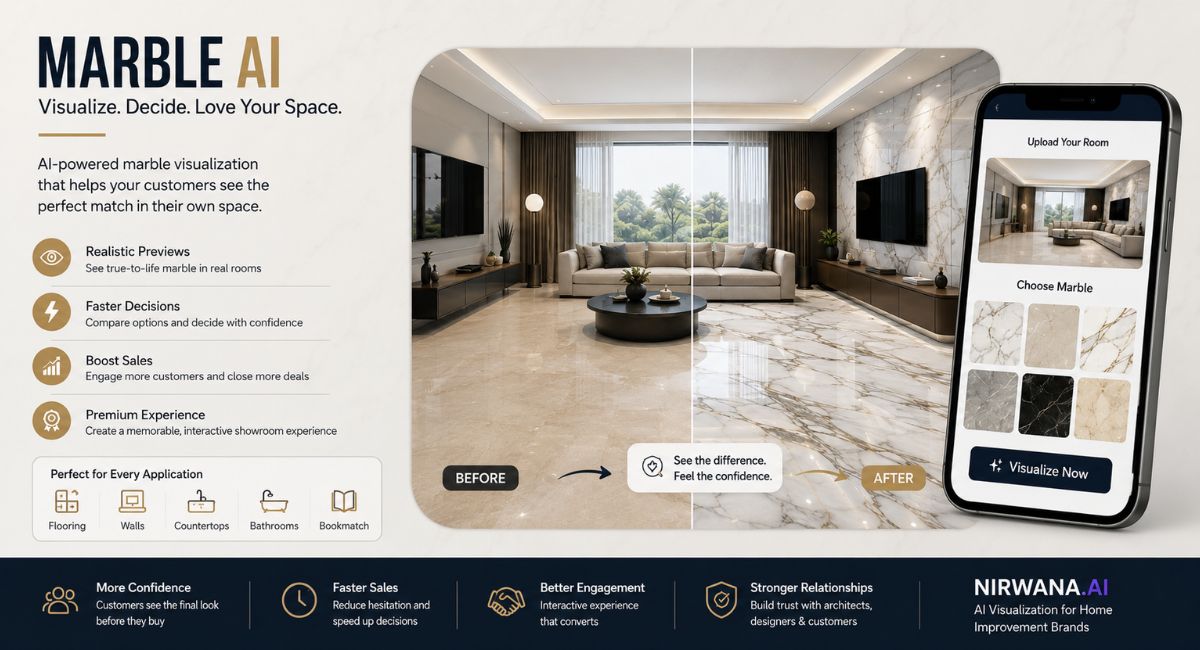
Buying marble has always been emotional. Customers don’t just choose a slab because it looks good in a showroom. They want to imagine how it will look on their floor, wall, countertop, bathroom, staircase, or living room feature wall. But that imagination gap is exactly where many sales conversations slow down.
A customer may love a marble design in the catalog, but still say, “Let me think about it.” Why? Because they are unsure how the final space will look.
This is where marble ai is becoming a powerful tool for stone brands, dealers, architects, and interior professionals. Instead of asking customers to imagine the result, businesses can now show realistic marble previews directly inside real rooms. This makes decision-making faster, more visual, and more confident.
For marble businesses, this is not just a design upgrade. It is a sales upgrade.
What Is Marble AI?
Marble ai refers to the use of artificial intelligence to visualize marble designs in real spaces. It allows users to upload a room image and apply different marble products on floors, walls, countertops, backsplashes, bathrooms, and other surfaces.
Instead of relying only on physical samples or static catalog images, AI can create realistic previews that show how a marble slab, tile, or texture will look after installation.
For example, a customer can see:
How white Italian marble looks on their living room floor
How a dark marble feature wall changes the feel of a bedroom
How a bookmatched marble slab looks behind a TV unit
How a countertop design matches cabinets and lighting
This makes the buying journey more practical and less dependent on guesswork.
Why Marble Brands Need Better Visualization
Marble is a premium product. Customers spend a lot of time comparing patterns, finishes, colors, and applications before making a final decision. The challenge is that marble often looks very different in a real space compared to a showroom slab or product photo.
The Customer Cannot Imagine the Final Look
Most customers are not designers. They may like a marble slab, but they cannot easily visualize it inside their own home. Even architects and interior designers sometimes need multiple renders or mockups to explain the final concept.
This delay can lead to longer sales cycles, repeated follow-ups, and lost deals.
Traditional Renders Take Time
Manual 3D renders are useful, but they are not always fast or affordable. A designer may take hours or days to create a room preview. For fast-moving sales teams and showrooms, this is not practical for every customer.
With marble ai, visual previews can be generated much faster, helping the sales team show options instantly.
Physical Samples Are Limited
Samples help customers understand texture and finish, but they do not show scale, pattern flow, lighting impact, or how the marble will match the rest of the room.
AI visualization fills this gap by showing the product in context.
How Marble AI Helps Stone Businesses Sell Better
Faster Customer Decisions
When customers can see the marble inside their own room, they feel more confident. Instead of imagining the result, they can compare multiple options visually.
For example, a customer deciding between beige marble and grey marble for a living room floor can instantly see both options. This reduces confusion and speeds up the buying process.
Better Showroom Experience
A showroom with marble ai can create a premium experience. Sales teams can upload a customer’s room image, select products from the brand’s catalog, and show realistic previews on a large screen or tablet.
This creates a strong “wow” moment and helps customers stay engaged for longer.
More Confidence for Architects and Designers
Architects and interior designers often need to present options to clients. AI-powered marble visualization helps them create quick concepts, compare materials, and explain design choices clearly.
This also helps marble brands build stronger relationships with architects because they are giving them a practical tool, not just a product catalog.
Higher Lead Quality from Websites
When a marble brand adds visualization to its website, visitors can interact with products instead of just browsing static images. This increases time on site and creates more serious inquiries.
A customer who has already tried a marble design in their own room is usually more qualified than someone who only viewed a product page.
Real Use Cases of Marble AI
- Marble Flooring Preview
Flooring is one of the most important marble applications. A small product image cannot show how the marble will look across a full room.
With AI visualization, customers can see the marble applied across the floor with correct scale, perspective, and lighting. This is especially useful for large-format marble, polished finishes, and natural vein patterns.
- Marble Wall and TV Unit Visualization
Feature walls are becoming popular in luxury homes, hotels, offices, and showrooms. Customers want to know whether the marble will look elegant or too heavy in the space.
Marble ai helps brands show different wall applications, including TV walls, bathroom walls, lobby walls, and bedroom backdrops.
- Countertop and Backsplash Preview
For kitchens, customers often compare marble with cabinets, flooring, lighting, and backsplash materials. AI previews help them see whether the countertop design works with the overall interior.
This is useful for stone brands selling marble, granite, quartz, and other premium surfaces.
- Bookmatch Marble Visualization
Bookmatch marble is beautiful, but difficult for customers to understand through normal slab photos. AI visualization can help show how mirrored marble patterns will look on walls, floors, or large panels.
This makes premium marble easier to sell because customers can clearly see the design impact.
What Makes a Good Marble AI Tool?
Not every visualizer gives realistic results. For marble, accuracy matters a lot because customers care about veins, color tone, polish, and natural variation.
True Product Accuracy
The tool should preserve the real look of the marble. If the color tone changes too much, the customer may lose trust. A good AI visualizer should keep the stone’s natural beauty intact.
Realistic Lighting and Perspective
Marble reflects light. A flat overlay can look fake if it does not match room lighting and angle. The best tools adjust the marble preview according to the surface, perspective, and environment.
Scale and Pattern Control
A marble design must appear in the correct size. If the pattern is too large or too small, the preview becomes misleading. Accurate scale helps customers make better decisions.
Easy Website and Showroom Integration
For brands, the tool should be easy to use across websites, sales teams, dealer networks, and showrooms. Nirwana.ai, for example, focuses on helping home improvement brands create realistic product previews that support both online and offline sales journeys.
Benefits for Marble Manufacturers and Dealers
For Manufacturers
Marble manufacturers can use AI visualization to support dealers, architects, and distributors. Instead of only sharing product catalogs, they can provide a digital tool that helps their network sell faster.
This improves brand recall and makes the manufacturer easier to recommend.
For Dealers and Showrooms
Dealers can use marble ai during customer meetings to show multiple options quickly. This helps them handle objections, compare designs, and close deals with more confidence.
For Architects and Interior Designers
Design professionals can use AI previews to explain concepts clearly. This reduces back-and-forth and helps clients approve materials faster.
For Customers
Customers get clarity. They can see how different marble choices will look before making a purchase. This reduces doubt and improves satisfaction.
Why Marble AI Is Becoming a Sales Tool, Not Just a Design Tool
The biggest shift is that AI visualization is no longer only about creating pretty images. It is now directly connected to sales performance.
A good marble visualizer can help businesses:
Reduce customer hesitation
Increase product engagement
Improve website conversions
Support sales teams during meetings
Create premium presentations
Help architects recommend products faster
Make showrooms more interactive
This is why brands are moving from traditional catalogs to AI-powered visual selling.
When customers can see the final result, the conversation changes from “I’m not sure” to “This looks good. What is the next step?”
How Nirwana.ai Supports Marble Visualization
Nirwana.ai helps marble and stone businesses create realistic room previews using AI-powered visualization. The goal is simple: help customers see marble products in real spaces before they buy.
For brands, this can be used on websites, in showrooms, by sales teams, and across dealer or architect networks. Instead of depending only on imagination, brands can give customers a more confident and premium buying experience.
Conclusion
Marble is a high-value product, and customers need confidence before making a decision. Marble ai helps bridge the gap between product selection and final installation by showing realistic previews in real spaces.
For marble manufacturers, dealers, showrooms, and designers, this technology can make the sales process faster, clearer, and more engaging. It helps customers understand the product better and helps businesses present marble in a more modern way.
If your brand wants to make marble selection easier, more visual, and more confidence-driven, AI-powered visualization is a smart step forward.

 Apptunix Technologies
 vision info