Nirwana AI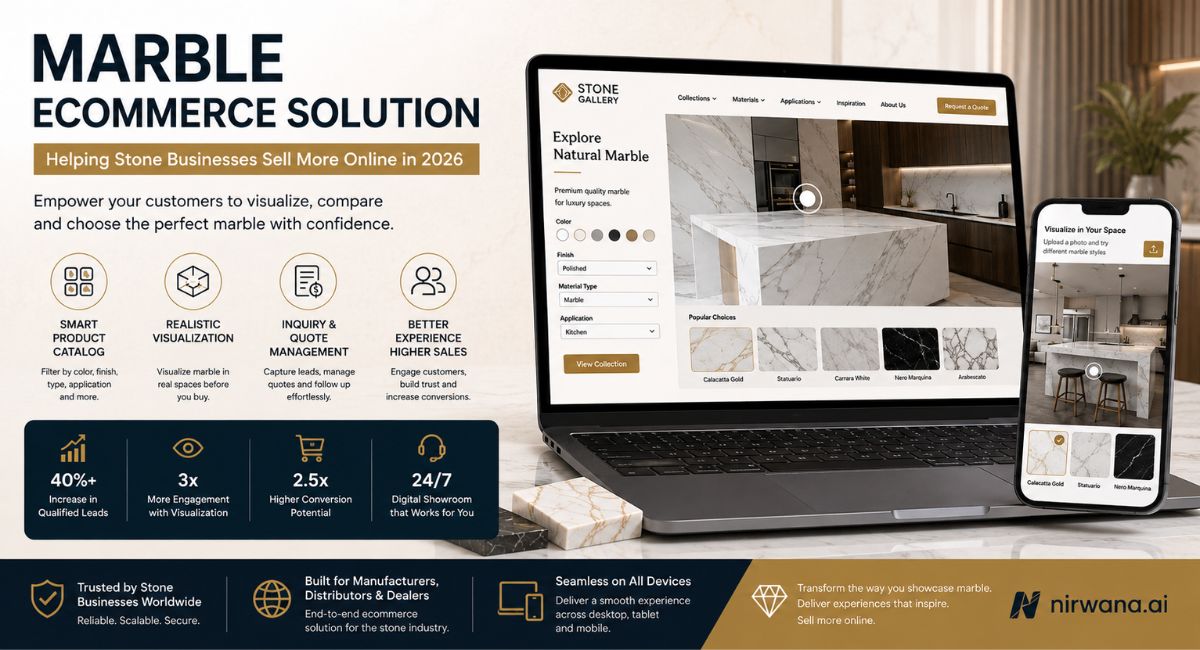
The way customers buy marble has changed dramatically over the last few years. Whether they are homeowners planning a renovation, architects working on a luxury project, or interior designers sourcing materials for clients, most buyers now begin their journey online.
The challenge is that marble is not an easy product to sell digitally. Unlike clothing or electronics, buyers want to see the texture, veins, finish, and overall appearance before making a decision. A single slab image often fails to communicate what the material will actually look like in a real environment.
This is where a modern Marble ecommerce solution becomes valuable.
Instead of simply displaying product catalogs, today’s marble businesses need digital experiences that help customers visualize, compare, and confidently select the right stone. In this article, we’ll explore why marble companies are investing in ecommerce technology and what features truly make a difference.
Why Traditional Marble Websites Struggle to Convert
Many marble websites still follow the same structure:
- Product gallery
- Technical specifications
- Contact form
- Phone number
While this approach provides information, it rarely helps customers make purchasing decisions.
Imagine a homeowner browsing through hundreds of marble slabs online. They may like a particular design, but they still wonder:
- How will it look in my kitchen?
- Will the veining appear too strong?
- Does it match my cabinets?
- Is this the right color for my space?
Without answers to these questions, buyers often postpone decisions or move to competitors.
A strong Marble ecommerce solution removes this uncertainty by helping customers see the product in context before making an inquiry.
The Evolution of Marble Buying
Years ago, customers would visit multiple showrooms to compare stones. Today, most buyers research extensively online before speaking to a supplier.
In many cases, architects and designers shortlist materials before even stepping into a showroom.
This means marble businesses have only a few seconds to capture attention and create confidence.
Modern buyers expect:
- High-quality product presentation
- Fast website performance
- Visual inspiration
- Easy product discovery
- Realistic previews
A professional Marble ecommerce solution helps meet these expectations while creating a smoother buying experience.
Key Features Every Marble Ecommerce Solution Should Include
Product Catalog Management
Marble businesses often manage hundreds or even thousands of stone variations.
An effective ecommerce platform should allow customers to filter products based on:
- Color
- Finish
- Material type
- Thickness
- Application
- Pattern style
This helps buyers quickly narrow down options instead of feeling overwhelmed.
Realistic Visualization Tools
One of the biggest challenges in marble sales is helping customers imagine the final result.
Visualization technology allows users to upload photos of their own spaces and preview marble surfaces on walls, floors, countertops, bathrooms, and other applications.
This feature significantly improves confidence and often accelerates purchasing decisions.
High-Quality Slab Presentation
Natural stone is unique. Every slab has its own pattern and character.
A modern Marble ecommerce solution should showcase products using:
- High-resolution slab photography
- Zoom functionality
- Multiple viewing angles
- Detailed texture visibility
The closer the online experience feels to viewing a slab in person, the better the conversion potential.
Lead Generation and Inquiry Management
Not every visitor is ready to purchase immediately.
That’s why an ecommerce platform should capture leads through:
- Product inquiry forms
- Sample requests
- Quote requests
- Consultation bookings
This ensures businesses continue nurturing potential buyers throughout the decision-making process.
How Visualization Technology Is Changing Marble Ecommerce
Visualization has become one of the most powerful tools in the natural stone industry.
Instead of asking customers to imagine how marble will look in their homes, businesses can now show them.
For example, a customer planning a kitchen renovation can upload a photo and instantly preview different marble countertops. Similarly, architects can test multiple stone options for commercial projects before finalizing specifications.
This approach offers several advantages:
- Higher customer engagement
- Longer website session times
- Better-qualified leads
- Faster decision-making
- Increased conversion rates
Companies using advanced visualization technology are often able to differentiate themselves in highly competitive markets.
Benefits for Marble Manufacturers and Dealers
Increased Sales Opportunities
When customers can visualize products in realistic settings, they become more confident in their selections.
This confidence often translates into higher inquiry rates and stronger purchase intent.
Better Customer Experience
Buying marble can feel complicated for many customers.
A user-friendly Marble ecommerce solution simplifies the process by providing guidance, inspiration, and realistic previews throughout the journey.
Reduced Dependence on Physical Showrooms
While showrooms remain important, digital experiences can significantly reduce the number of visits required before a customer makes a decision.
Buyers arrive better informed and closer to making a purchase.
Stronger Competitive Advantage
Many marble companies still rely on traditional catalogs and static images.
Businesses that adopt modern ecommerce technology stand out by offering a more engaging and interactive buying experience.
Real-World Example
Consider two marble suppliers selling similar products.
Supplier A offers slab images and a contact form.
Supplier B offers a complete Marble ecommerce solution with product filters, room visualization, project inspiration galleries, and online quotation requests.
Most buyers naturally spend more time on Supplier B’s website because it helps them make decisions.
Even when prices are similar, the business providing a better buying experience often wins the sale.
The Future of Marble Ecommerce
The natural stone industry is rapidly moving toward digital-first customer journeys.
Over the next few years, we can expect marble ecommerce platforms to incorporate:
- AI-powered product recommendations
- Advanced room visualization
- Personalized design suggestions
- Automated lead qualification
- Faster online purchasing workflows
Companies that invest early in these technologies will be better positioned to attract modern buyers.
Solutions from companies like Nirwana.ai are helping marble businesses bridge the gap between traditional showroom experiences and digital commerce. By combining realistic visualization with powerful ecommerce functionality, brands can create buying journeys that feel intuitive and engaging.
Conclusion
Selling marble online requires much more than displaying product photos. Buyers want confidence, inspiration, and the ability to visualize materials before making important decisions.
A modern Marble ecommerce solution helps marble manufacturers, distributors, and dealers deliver exactly that. From product discovery and visualization to lead generation and customer engagement, the right platform can transform how natural stone is marketed and sold online.
As customer expectations continue to evolve, businesses that embrace digital innovation will be the ones that attract more qualified leads, improve conversions, and build stronger relationships with buyers.
If you’re looking to modernize your marble sales process, exploring advanced visualization-driven ecommerce solutions from providers like Nirwana.ai can be an excellent place to start.


 Dhanu Shree
 FitBiZOS SgAI