Jordan Bent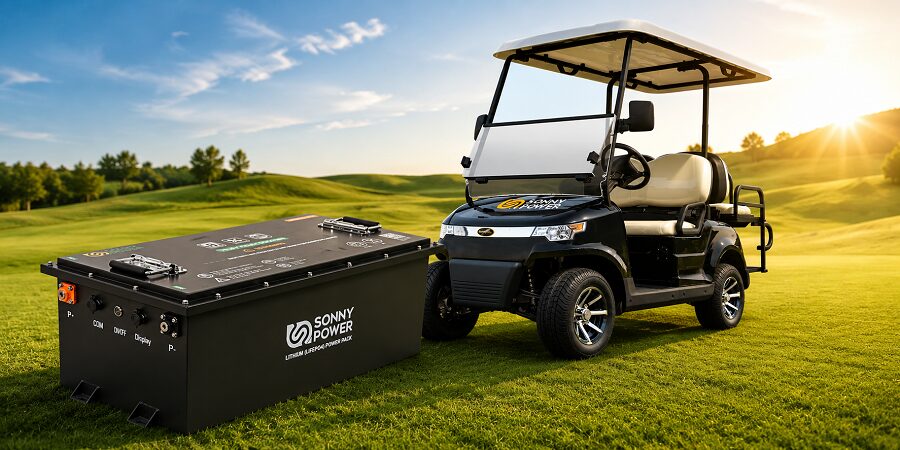
There’s a specific frustration that builds up over a couple of seasons with lead-acid batteries. The cart doesn’t suddenly stop working. It just gets slightly worse in ways that feel easy to ignore until they aren’t. A hill that used to be nothing becomes something to think about. The range that felt comfortable starts requiring more careful planning. The charging routine that was already annoying gets more demanding.
Then someone nearby makes the switch to a 72v golf cart battery, and suddenly the comparison becomes impossible to unsee.
The Difference Shows Up Before the First Round Is Over
Lithium iron phosphate chemistry doesn’t fade across a discharge cycle the way lead acid does. That single fact changes everything about how a cart behaves throughout a full day of use.
With lead-acid, strong performance at the start of a round gives way to something noticeably slower and heavier feeling by the back nine. The voltage drops under load throughout the discharge — that’s not a maintenance issue or a sign the battery needs replacing. That’s just how the chemistry behaves, every single cycle, from the day it leaves the factory.
A 72 volt lithium golf cart battery holds its output flat from a full charge down to near empty. The cart that pulls cleanly away from the first tee does the same thing on the eighteenth hole. Hills that require patience with a depleted lead-acid pack don’t register differently at any point in the charge cycle with lithium iron.
Weight reduction adds to that. Lithium iron packs weigh considerably less than lead acid at the same voltage — less mass moving means the motor works less hard, handling feels lighter through tighter spaces, and wear on the drivetrain components accumulates more slowly across years of regular use.
Getting the Purchase Right the First Time
Quality variation in the 72V golf cart battery market is real, and price doesn’t always reflect it accurately. The Battery Management System, doing continuous work behind the scenes — handling temperature, discharge rates, charge protection — determines long-term reliability far more than specifications written for a product listing.
Warranty length tells the honest version of the story. A manufacturer backing their battery for ten years made different decisions at every stage of production than one offering twelve months and hoping for the best.
Sonny Power supplies lithium iron golf cart batteries with a 10-year warranty and free nationwide shipping — built for real-world cart use rather than controlled testing environments.
One properly chosen 72-volt lithium golf cart battery outlasts several lead-acid replacement cycles and outperforms them throughout. That trade-off stops being complicated very quickly.

 Nirwana AI
 quickbook supportnet