nelson k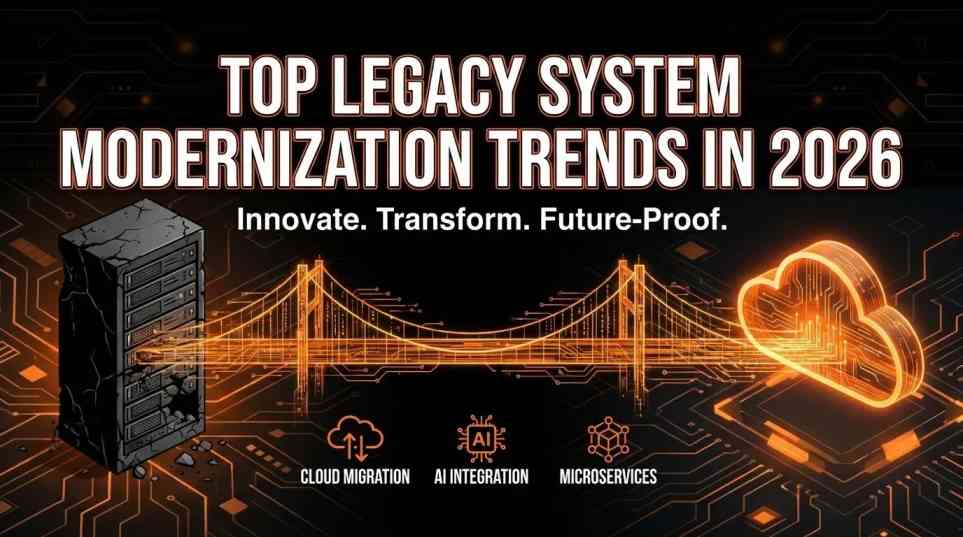
I spent most of 2024 telling myself the same thing every overwhelmed business owner tells themselves. “The technology is fine for now. We will modernize when things slow down.” Things never slowed down. And the technology was not fine. It was quietly getting worse while I looked the other direction.
Our estimating platform took eleven minutes to generate a quote. Eleven minutes. I timed it once during a client call and had to fill the silence with small talk while the progress bar crept forward. Our project tracking system lost two days of logged hours during a server hiccup in September. My team re-entered everything from memory and handwritten timesheets. Our client portal looked like it had been designed for a flip phone — because functionally, it had been. Built in 2012. Last meaningful update in 2016.
I finally stopped making excuses in early 2025 when a prospect asked me to share our project dashboard during a video call. I panicked. Made up a reason why screen sharing was not working. Ended the call early. Lost the deal anyway because they probably sensed I was hiding something. I was. I was hiding a technology stack that would have embarrassed a company half our size.
That moment sent me looking for answers. And the legacy system modernization services landscape I found had changed in ways I did not expect. Real trends — not buzzwords — that were making modernization faster, cheaper, and less terrifying than anything I had been quoted in previous years.
Here are the trends that actually mattered when it came time to fix what I had been avoiding.
Trend 1 — AI-powered discovery replaced months of guesswork
This was the one that changed everything for me. In previous years, the first phase of any modernization project meant hiring consultants to manually map your systems over four to six months. Expensive. Slow. And they still missed things.
In 2026, AI discovery tools scan your entire environment in one to two weeks. Every application, every database, every integration, every data flow. Our scan took nine days and found eleven connections between systems — four of which had been built by contractors who no longer worked with us and none of which were documented. One was a nightly data sync to a backup server that had been decommissioned eight months earlier. The sync was failing silently every night and writing error logs that were filling up disk space on our production server. We were weeks away from a storage failure nobody saw coming.
No manual audit would have found that in time.
Trend 2 — Generative AI compressed migration timelines in half
The quotes I received in 2022 and 2023 estimated twelve to eighteen months for our core systems. The team I engaged in 2025 completed our estimating platform in seven weeks. Seven. Generative AI handled the code translation from our legacy framework to modern architecture. Engineers made the design and security decisions. The combination cut timelines by roughly 40 to 50 percent compared to traditional methods.
A commercial printing company I know experienced the same shift — a quoting system migration quoted at ten months was completed in under twelve weeks using AI-assisted tools. The speed is not theoretical anymore. It is documented and repeatable.
Trend 3 — Phased modernization became the standard, not the exception
The old approach was big-bang — modernize everything at once, cross your fingers, and hope nothing breaks catastrophically. That approach failed more often than it succeeded. In 2026, phased execution is the default. One system at a time. Prove value. Expand.
I started with the estimating platform because it was causing the most visible client-facing damage. After that succeeded, I moved to the project tracking system, then the client portal. Each phase was funded by the confidence and cost savings generated by the one before it. A regional landscaping company followed the same model — starting with their scheduling tool, proving a 60 percent reduction in booking errors, then proceeding to their invoicing system. Sequential wins build organizational momentum that big-bang projects never achieve.
Trend 4 — AI testing eliminated the “did we break something” fear
This trend addressed the concern that had kept me up at night more than any budget number. What if the new system does not work? What if we lose data? What if clients notice problems?
AI testing tools now generate thousands of validation scenarios automatically — including edge cases nobody on your team would think to check. During our estimating platform migration, AI caught that the system miscalculated material quantities when project dimensions included metric measurements — a scenario affecting roughly nine percent of our quotes. That error had existed in our legacy system for years. Nobody caught it because nobody knew to look.
Every migrated component ran alongside its legacy counterpart for two to three weeks. AI compared every output. My project manager did not realize we had switched until I mentioned it at our Monday standup. That level of invisibility is the new standard for well-executed migrations.
Trend 5 — Zero trust security became non-negotiable
Legacy systems were built when cybersecurity meant a firewall and a password policy. That approach has been obsolete for years, but 2026 made it officially indefensible. Eighty-seven percent of organizations are running software with known exploitable vulnerabilities. The EU AI Act, fully enforced since August 2026, requires governance and audit capabilities that aging architectures cannot provide.
Every modernization project I encountered in 2026 included zero trust security as a foundational design principle — not an add-on. Continuous verification. No automatic trust for any user or device. Real-time monitoring powered by AI. Our modernized systems passed a client security audit on the first submission for the first time in our company’s history. That alone justified the investment.
Trend 6 — Composable architecture replaced monolithic rebuilds
Instead of replacing entire systems, organizations in 2026 are breaking legacy monoliths into modular, API-connected components. Each piece can be updated, scaled, or replaced independently without risking the whole platform.
A specialty food distributor I know wrapped their 15-year-old warehouse management system with modern APIs instead of rebuilding it from scratch. New mobile apps and partner integrations plugged into the old system through the API layer. Total cost was roughly a third of a full rebuild. Time to production: six weeks. Their warehouse operations never experienced a single interruption.
This trend is especially relevant for businesses that cannot afford downtime. You do not always need to replace the engine. Sometimes you just need to give it new connections to the outside world.
What these trends delivered for my business
Our estimating platform now generates quotes in under fifteen seconds — down from eleven minutes. Our project tracking system has not lost a single logged hour since migration. Our client portal looks and functions like it belongs in 2026. Infrastructure costs dropped 37 percent. And I no longer panic when a prospect asks to see a screen share.
That last one is not a metric anyone puts on a dashboard. But for a business owner who faked a technical issue to avoid showing his own software to a potential client, it might be the most meaningful outcome of all.
The concerns — addressed honestly
Cost. Phased modernization means one system at a time. Prove the return before expanding. ROI arrives within twelve to eighteen months. My estimating platform paid for itself within the first quarter through time savings alone.
Downtime. Parallel operation throughout. Legacy systems stay live as your safety net. Rollback available at every stage. My team experienced zero operational disruption across three consecutive migrations.
Risk. AI-powered discovery and testing systematically eliminate the unknowns that historically caused projects to fail. The greater risk in 2026 is continuing to operate on unpatched, unsupported, and increasingly fragile systems.
How Sparkout Tech helped me stop hiding my screen
They started by asking what was embarrassing me about my technology. Not what was broken. What was embarrassing. That question cut through every rationalization I had been using and got straight to the truth.
Their legacy application modernization services align with every trend described in this article — AI-powered discovery, generative AI migration, phased execution, zero trust security, and composable architecture. Built for business owners who know their systems need work but have been paralyzed by the scope of fixing them. One system at a time. Results before commitment.
The trends are not waiting for you to be ready
Get a complimentary assessment from Sparkout Tech. A clear look at your systems, your costs, and your options.
These six trends are already reshaping how your competitors operate. The question is not whether they are relevant to your business. It is whether you engage with them now — on your own terms — or later, when a client’s question, an insurance audit, or a system failure makes the decision for you.
I faked a screen-sharing malfunction to avoid showing my software to a prospect. You should not have to fake anything. Get the assessment. Start the process. Let 2026 be the year your technology becomes something you are proud to show.

 Epicware Ai
 QicApp Technologies