Maxwell Tools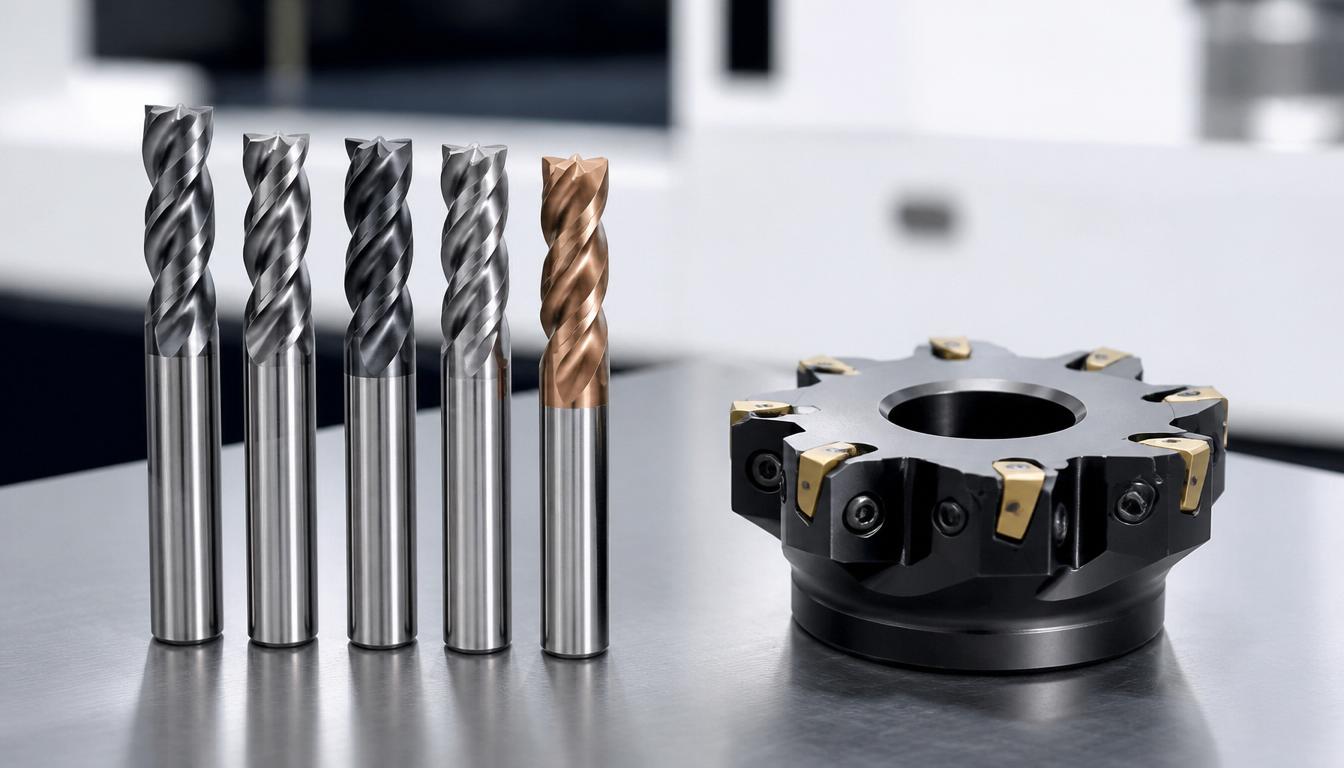
In CNC machining and modern manufacturing, selecting the right cutting tool is essential for achieving accuracy, efficiency, and cost-effective production. Two commonly used tools in this domain are end mills and milling cutters. While they may appear similar, they serve different purposes depending on the machining operation and material requirements.
Understanding the differences between them is important for industries working with precision machining, metal cutting, and high-volume production systems, especially when sourcing tools from an Industrial Milling Cutters Manufacturer.
Understanding Milling Cutters in CNC Machining
Milling cutters are a broad category of rotating cutting tools used in CNC machines for material removal. They are designed for operations such as:
- Facing and surface finishing
- Slotting and shaping
- Contouring and profiling
- Heavy material removal
These tools come in various forms depending on geometry and application, making them highly versatile in industrial machining environments.
What Are End Mills?
End mills are a specific type of milling cutter designed primarily for axial and lateral cutting. Unlike general milling cutters, they can cut in multiple directions, making them suitable for complex 2D and 3D machining operations.
They are commonly used for:
- Pocket milling
- Die and mold machining
- Precision contouring
- Complex surface profiling
Key Differences Between End Mills and Milling Cutters
1. Tool Classification
Milling cutters represent a broad category, while end mills are a specific type within that category.
- Milling cutters: General-purpose machining tools
- End mills: Specialized tools for precision and multi-directional cutting
2. Application Scope
Milling cutters are typically used for:
- Heavy-duty material removal
- Surface finishing
- Large-scale machining operations
End mills are used for:
- Precision machining
- Complex geometries
- CNC finishing operations
3. Cutting Direction
- Milling cutters often operate in a single primary direction depending on design
- End mills can cut in axial and radial directions simultaneously
This makes end mills more suitable for intricate CNC programming tasks.
4. Tool Geometry
Milling cutters come in multiple geometries such as:
- Face mills
- Side and face cutters
- Slitting cutters
End mills usually have:
- Flutes along the tool body
- Cutting edges at the tip and sides
- Designs optimized for precision control
5. Industrial Usage and Selection
Industries choose between these tools based on machining requirements, material type, and production scale.
In large-scale manufacturing environments, an Industrial Milling Cutters Manufacturer plays a key role in providing:
- Custom tool geometry solutions
- Carbide-based high-performance cutters
- Application-specific tooling designs
- Consistent quality for mass production needs
Role in Modern CNC Manufacturing
Both tools are essential in CNC machining systems, but their usage depends on the complexity of the part being manufactured.
- Milling cutters improve efficiency in bulk material removal
- End mills enhance precision in detailed machining operations
Together, they form a complete tooling system used in automotive, aerospace, die & mold, and general engineering industries.
Read more: Best End Milling Cutters for Steel & Aluminum
Importance of Choosing the Right Manufacturer
Tool performance depends heavily on manufacturing quality. A reliable Industrial Milling Cutters Manufacturer ensures:
- High tool life through premium materials
- Precision-ground cutting edges
- Proper coating for wear resistance
- Stability in high-speed CNC operations
This directly impacts machining accuracy, productivity, and overall production cost.
Conclusion
While end mills and milling cutters are both essential in CNC machining, they serve different roles in manufacturing processes. Milling cutters are more general-purpose tools for material removal, while end mills are specialized for precision and complex machining tasks.
Choosing the right tool—and sourcing it from a reliable Industrial Milling Cutters Manufacturer—ensures better efficiency, accuracy, and long-term performance in industrial production systems.


 Savi Kumari
 Thatware LLP