Nirwana AI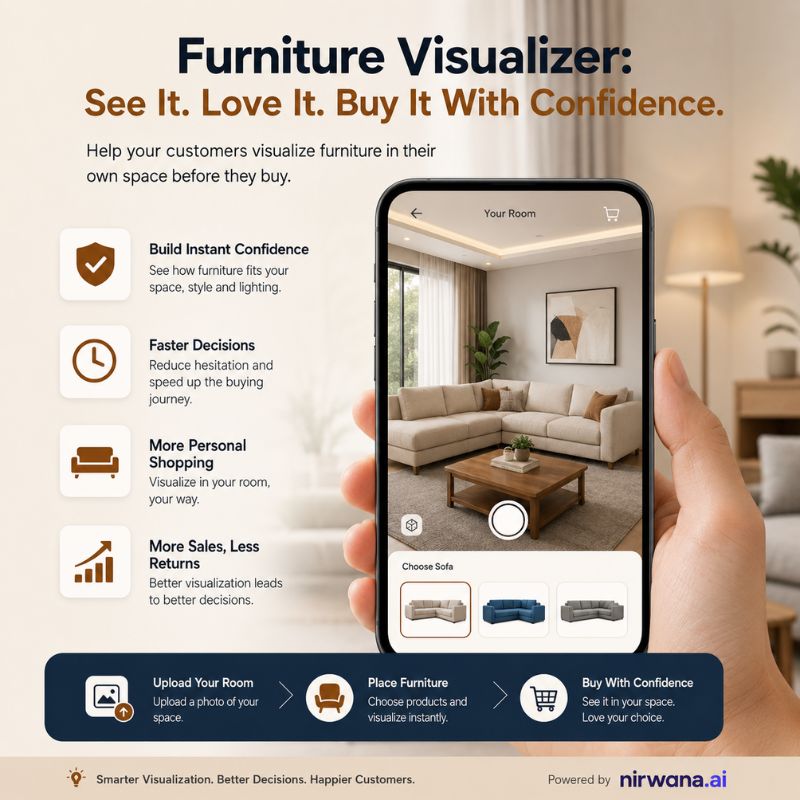
Buying furniture has always been an emotional decision. People do not just buy a sofa, bed, dining table, or chair because it looks good in a catalog. They buy it because they can imagine it inside their home, matching their walls, flooring, lighting, and lifestyle. But that imagination is also where most buying hesitation begins.
A customer may love a product online, but still wonder: Will this fit my room? Will the color look too dark? Will the size feel too large? Will it match my existing decor?
This is exactly where a furniture visualizer changes the buying experience. Instead of asking customers to guess, it lets them see how a furniture piece may look in a real space before making a decision. For furniture brands, retailers, and e-commerce stores, this is not just a nice digital feature. It is becoming a practical sales tool that improves confidence, reduces confusion, and helps customers move faster from interest to purchase.
What Is a Furniture Visualizer?
A furniture visualizer is a digital tool that allows users to preview furniture products in a room setting. Customers can upload a photo of their space or choose from pre-set room scenes, then place furniture items inside that environment.
For example, someone shopping for a sectional sofa can view it in their living room before placing an order. A customer looking for a wooden dining table can check whether the finish matches their flooring and wall color. A homeowner buying a bed can understand whether the size works well inside the bedroom.
The goal is simple: make the customer feel more certain before they buy.
Why Furniture Brands Need Better Visualization
Furniture shopping is very different from buying small products. Furniture is expensive, large, style-driven, and often difficult to return. A wrong purchase can create serious frustration for the customer and operational problems for the brand.
Many online furniture stores still depend on product photos, lifestyle images, dimensions, and descriptions. These are important, but they do not fully answer the customer’s biggest question: How will this look in my space?
That gap between product interest and purchase confidence is where many sales are lost.
A furniture visualizer helps close that gap by giving customers a more realistic and personal preview. Instead of only seeing a sofa in a staged studio, they can see it in a room that feels relevant to them. This makes the buying journey more interactive and less dependent on guesswork.
How It Improves the Customer Buying Journey
It Builds Instant Confidence
When customers can visualize a furniture piece in a real room, they feel more confident about their decision. They can judge size, color, placement, and style more clearly. This confidence is especially important for high-value purchases such as sofas, beds, wardrobes, recliners, and dining sets.
It Reduces Decision Delays
Many customers browse furniture websites multiple times before buying. They compare options, ask family members, save screenshots, and still remain unsure. A furniture visualizer makes the decision process easier by giving them a stronger reason to take action.
When the customer can see the product in context, the question changes from “Will this work?” to “This looks good, should I order it now?”
It Makes Online Shopping Feel More Personal
Modern customers expect personalized shopping experiences. They do not want to only see generic product images. They want tools that help them make choices based on their own space, taste, and needs.
This is where platforms like Nirwana.ai can help furniture brands create a more engaging and realistic product discovery experience.
Real Examples of Furniture Visualization in Action
Imagine a customer searching for a beige three-seater sofa. On a normal website, they may see product images, measurements, and fabric details. But they still need to imagine how it will look beside their TV unit, rug, curtains, and wall color.
With a furniture visualizer, they can upload a living room photo and preview the sofa directly in that space. If it looks too large, they can try a smaller model. If the color feels too light, they can explore another shade.
Now think about an office furniture brand selling workstations, chairs, and meeting tables. A business buyer can visualize how different furniture layouts may look inside a workspace before finalizing an order. This makes the purchase more practical and reduces back-and-forth discussions.
For luxury furniture brands, visualization also adds a premium digital experience. Customers are not just browsing products. They are interacting with them in a way that feels modern, guided, and personal.
Benefits for Furniture Brands and Retailers
Higher Engagement on Website
Interactive tools keep customers on the website longer. Instead of passively scrolling through products, users actively try different furniture pieces, room layouts, and design combinations. This increases product discovery and gives brands more opportunities to influence the buying decision.
Better Quality Leads
A customer who has already visualized a product in their space is usually more serious than someone who only viewed a catalog image. They have spent time with the product, explored how it fits, and moved closer to purchase intent.
Lower Purchase Anxiety
Furniture purchases often involve doubt. The bigger the product, the bigger the hesitation. Visualization helps reduce that anxiety by making the outcome easier to understand before payment.
Stronger Sales Conversations
For sales teams, a visual preview can be far more persuasive than a product description. Instead of explaining how a sofa or table may look, they can show it. This is useful for website leads, showroom follow-ups, WhatsApp selling, and interior design consultations.
Why Realism Matters in a Furniture Visualizer
Not every visualization tool creates the same impact. If the preview looks flat, unrealistic, or poorly scaled, it can damage trust instead of improving it.
A good furniture visualizer should focus on realistic placement, accurate scale, proper lighting, clean edges, and natural room integration. The furniture should not look like a sticker placed on top of an image. It should feel like it belongs in the room.
This is especially important for premium brands, where product presentation directly affects perceived value. Nirwana.ai focuses on creating realistic visualization experiences that help brands present furniture in a more polished and conversion-focused way.
The Future of Furniture Shopping Is Visual
As online furniture shopping grows, customers will expect more than static images. They will want to see, compare, customize, and understand products before making a purchase. Brands that offer this experience will stand out from competitors that still depend only on traditional catalogs.
The furniture visualizer is becoming a bridge between online convenience and showroom-level confidence. It gives customers the freedom to explore products from home while still getting a clear sense of how those products will look in real life.
Conclusion
Furniture buying is personal, visual, and often filled with hesitation. Customers want to make the right choice, but they need help seeing the final result before they commit.
A furniture visualizer gives them that clarity. It helps brands improve engagement, support better decisions, and create a more modern shopping experience. For furniture businesses looking to improve online conversions and customer confidence, tools like Nirwana.ai can be a smart step forward.
Ready to make furniture shopping easier for your customers? Start by giving them the power to see your products in their own space.


 rajdeep Singh
 Daniel Jack